When Precision
Determines Success.
Pharmaceutical, medical device, electronics, and biotech manufacturing require controlled environments protecting products from contamination. Legacy's hybrid approach delivers controlled environment structures in months rather than years, supporting your quality standards and regulatory requirements while accelerating ROI.
Controlled Environments
Can't Wait.
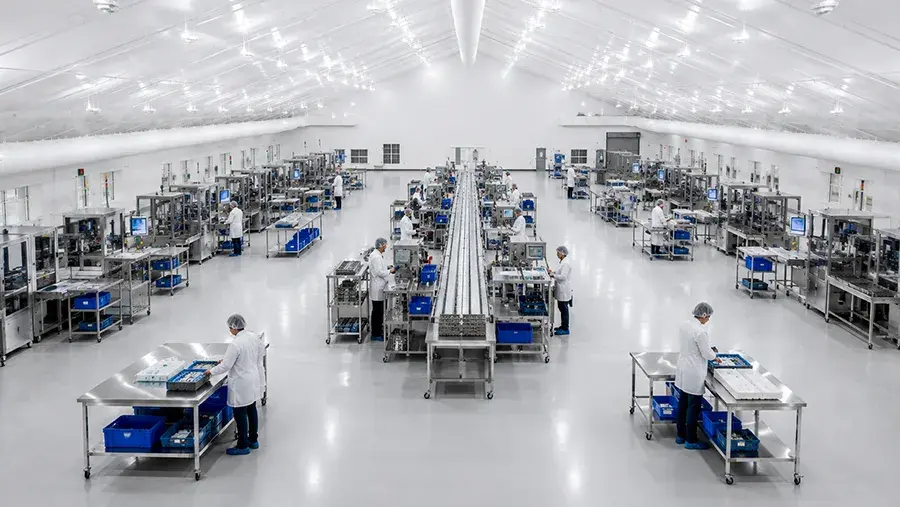
Controlled manufacturing environments demand more from a building envelope than standard construction delivers. In most steel structures, exposed interior framing creates dust ledges—horizontal surfaces where particulates accumulate and compromise air quality. Legacy's steel frame is fully enclosed within the PVC membrane, eliminating exposed structural members from the interior entirely. No ledges or accumulation points.
The envelope also gives engineers precise control over air leakage—a critical variable for facilities managing ISO classifications, cleanroom pressure differentials, and contamination protocols. Where conventional construction leaves gaps that undermine HVAC performance, Legacy structures are engineered to hold the tolerances controlled environments require.
Choose Your Configuration
Enclosed, Insulated & Lined
Full weather enclosure with insulation and ExxoTec™ Pro interior liner. Opaque envelope; supports HVAC, humidity control, and environmental monitoring systems. Applicable for pharmaceutical manufacturing, medical device assembly, electronics fabrication, biotech processing, and any controlled environment application requiring temperature management, humidity control, contamination resistance, and GMP/ISO-compatible materials.
Controlled Environment Manufacturing
Through Engineered Construction
Legacy's structural design supports controlled environment requirements that pharmaceutical, medical device, electronics, and biotech manufacturers specify. Custom engineering addresses temperature control, humidity management, and material selection while maintaining accelerated construction schedules.
-
Clean Interior Environment
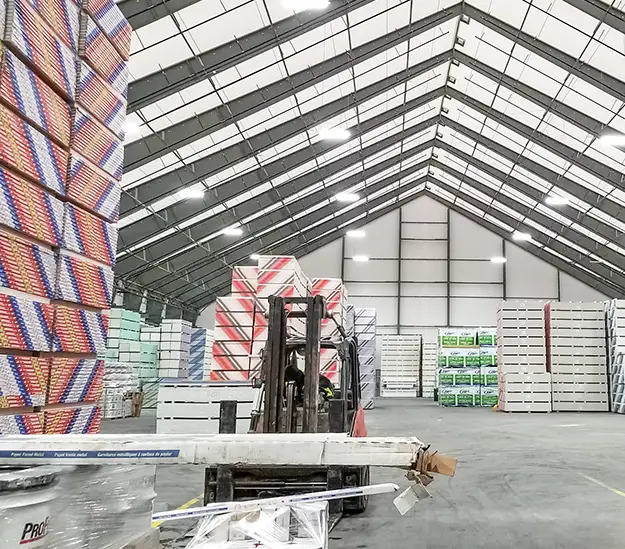
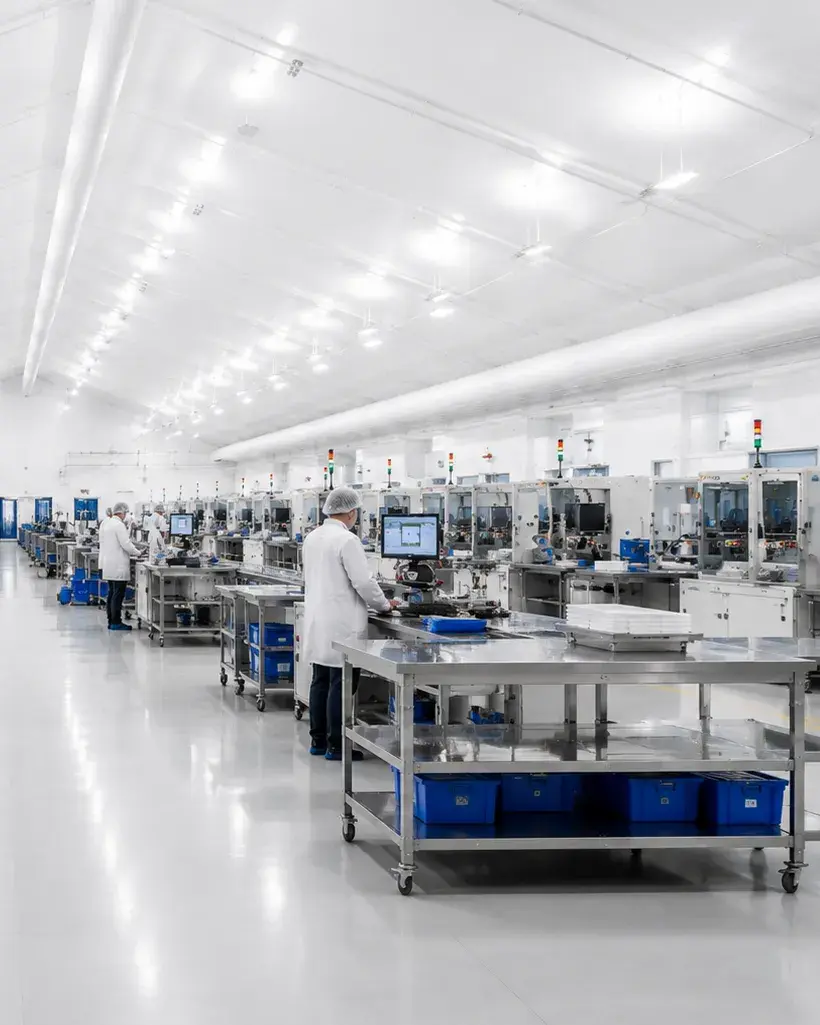
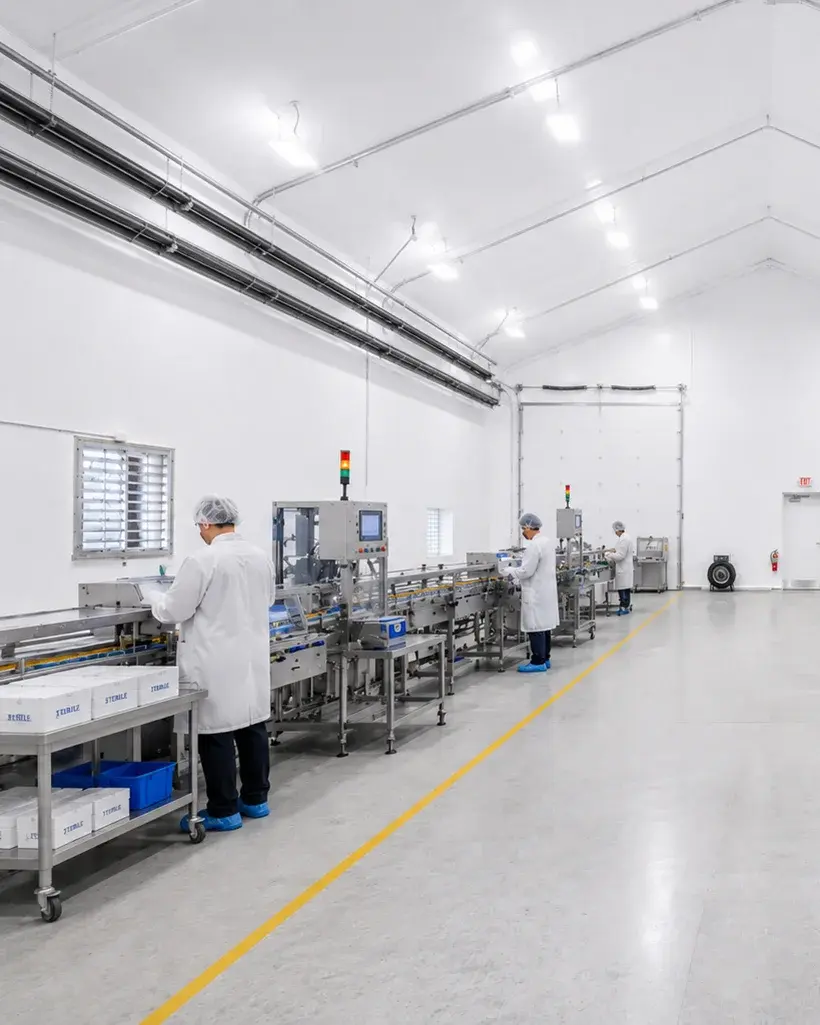
ExxoTec™ Pro interior liner provides superior air infiltration performance (10x code requirement) to help keep exterior contaminants out of the building environment. All ExxoTec™ Pro seams are heat-welded to create a monolithic interior vapor barrier and liner system. The liner is located on the interior-side of all structural steel. This eliminates dust ledges and hard-to-clean spaces that are common with other systems, such as metal buildings.
A bright and reflective interior liner system can enhance lighting levels for precise manufacturing operations.
-
Rapid Facility Deployment
Traditional construction delays compound financial pressure while competitors capture market share. Legacy's pre-engineered approach reduces facility construction from 18-24 months to 6-12 months. In-house manufacturing eliminates supply chain delays affecting conventional construction. Components arrive site-ready for installation, compressing project timelines while maintaining quality standards. Faster occupancy accelerates production launch, revenue generation, and return on invested capital—critical factors when regulatory approval timelines or market windows drive business decisions.
-
Climate Control Integration
Controlled manufacturing requires precise temperature and humidity management protecting sensitive processes. Legacy structures accommodate HVAC systems, insulation specifications, and environmental monitoring equipment your operations require. Legacy’s approach enables insulation solutions designed to achieve required thermal performance levels.
Clear-span interiors eliminate obstructions affecting airflow patterns while supporting equipment placement flexibility. This engineering approach delivers climate stability supporting pharmaceutical stability testing, medical device assembly, electronics fabrication, or biotech processing.
-
Scalable Infrastructure Design
Manufacturing capacity requirements evolve as products commercialize and markets expand. Legacy structures accommodate future expansion through modular design principles. Initial builds support near-term production needs while structural engineering enables capacity additions without demolishing existing facilities.
This approach protects initial capital investment while supporting growth trajectories that pharmaceutical and medical device manufacturers require as products transition from clinical trials to commercial scale. Electronics and biotech operations benefit from the same expansion capability as technology advances or demand increases.
Additional Resources
FAQs
-
Can Legacy structures support pharmaceutical or medical device manufacturing requirements?
Legacy structures accommodate controlled environment specifications pharmaceutical and medical device manufacturers require. The engineering process begins by understanding your environmental control needs—temperature ranges, humidity parameters, material specifications, and regulatory requirements. Structures support HVAC integration, insulation installation, and material selection addressing GMP compliance, ISO standards, or FDA validation requirements.
-
What are the typical construction timelines compared to traditional facilities?
Legacy structures typically reach operational status in 3-12 months from design approval to occupancy, depending on the building use and complexity. This acceleration stems from in-house manufacturing eliminating supply chain dependencies, pre-engineered components arriving site-ready for installation, and streamlined processes reducing coordination delays.
-
How does Legacy address temperature and humidity control for sensitive manufacturing?
Controlled manufacturing demands precise environmental management protecting product quality and process stability. Legacy structures accommodate HVAC systems, insulation specifications, and monitoring equipment your operations require. Clear-span interiors eliminate obstructions affecting airflow distribution while supporting optimal equipment placement. Insulated buildings can achieve thermal performance supporting pharmaceutical stability requirements, electronics fabrication specifications, or biotech processing parameters.
-
Can structures integrate specialized wall materials or finishes?
Yes. Controlled environments often require specific wall materials beyond standard construction—FRP panels for pharmaceutical wash-down areas, architectural metal for chemical resistance, or specialized finishes for contamination control. Legacy's separated roof-wall system provides material flexibility traditional structures cannot achieve.
-
How does Legacy's manufacturing quality certification support regulated industries?
Legacy operates under ISO 9001:2015 certification with manufacturing processes conducted in temperature and humidity-controlled facilities—the same environmental controls manufacturers require for their own operations. Steel fabrication, manufacturing, and component assembly undergo quality inspections before site shipment.
Accelerate Manufacturing Readiness
Our engineering team develops controlled environment structures supporting your quality requirements and regulatory standards—delivered in months rather than years, protecting your market position and accelerating return on investment.


