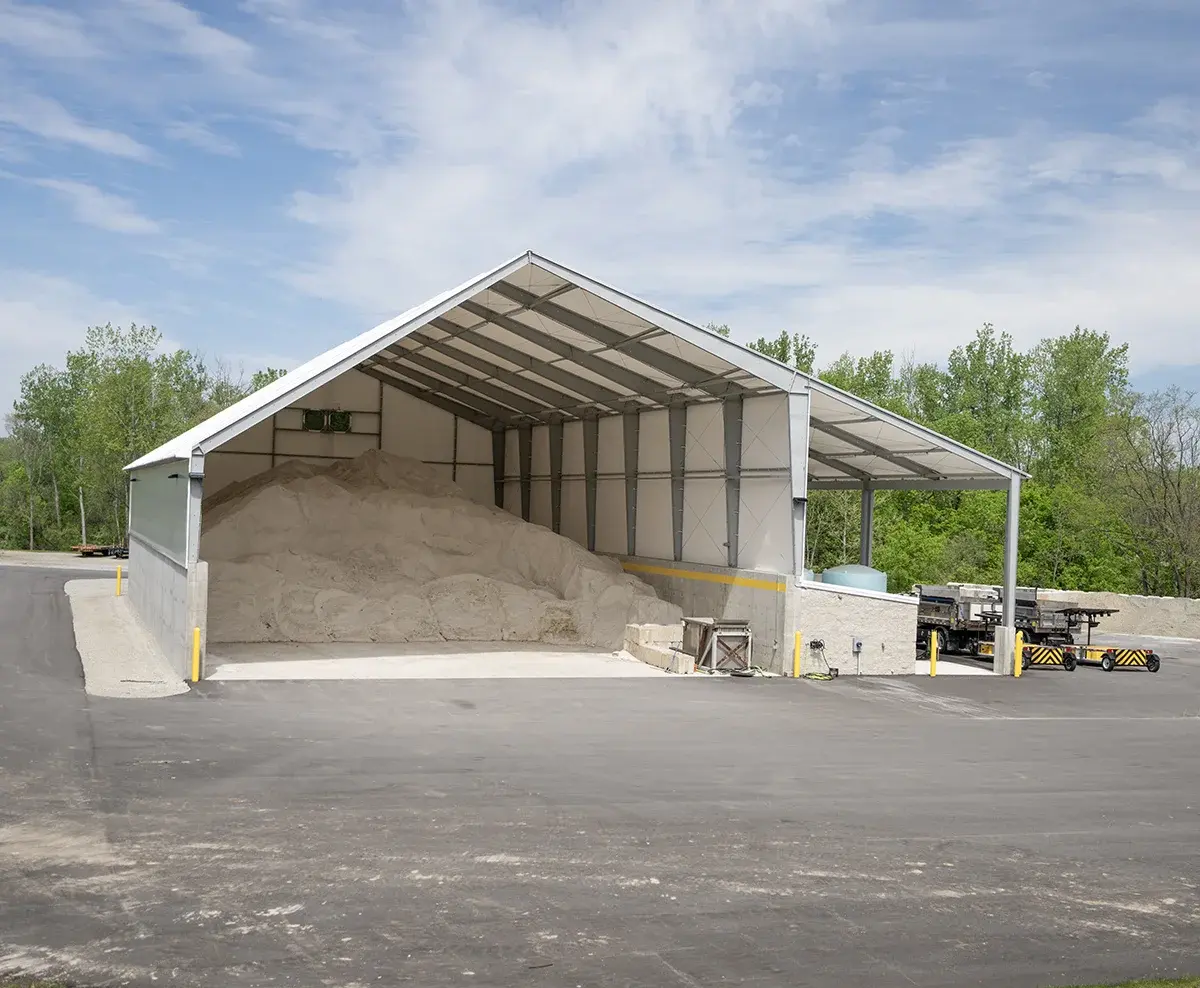
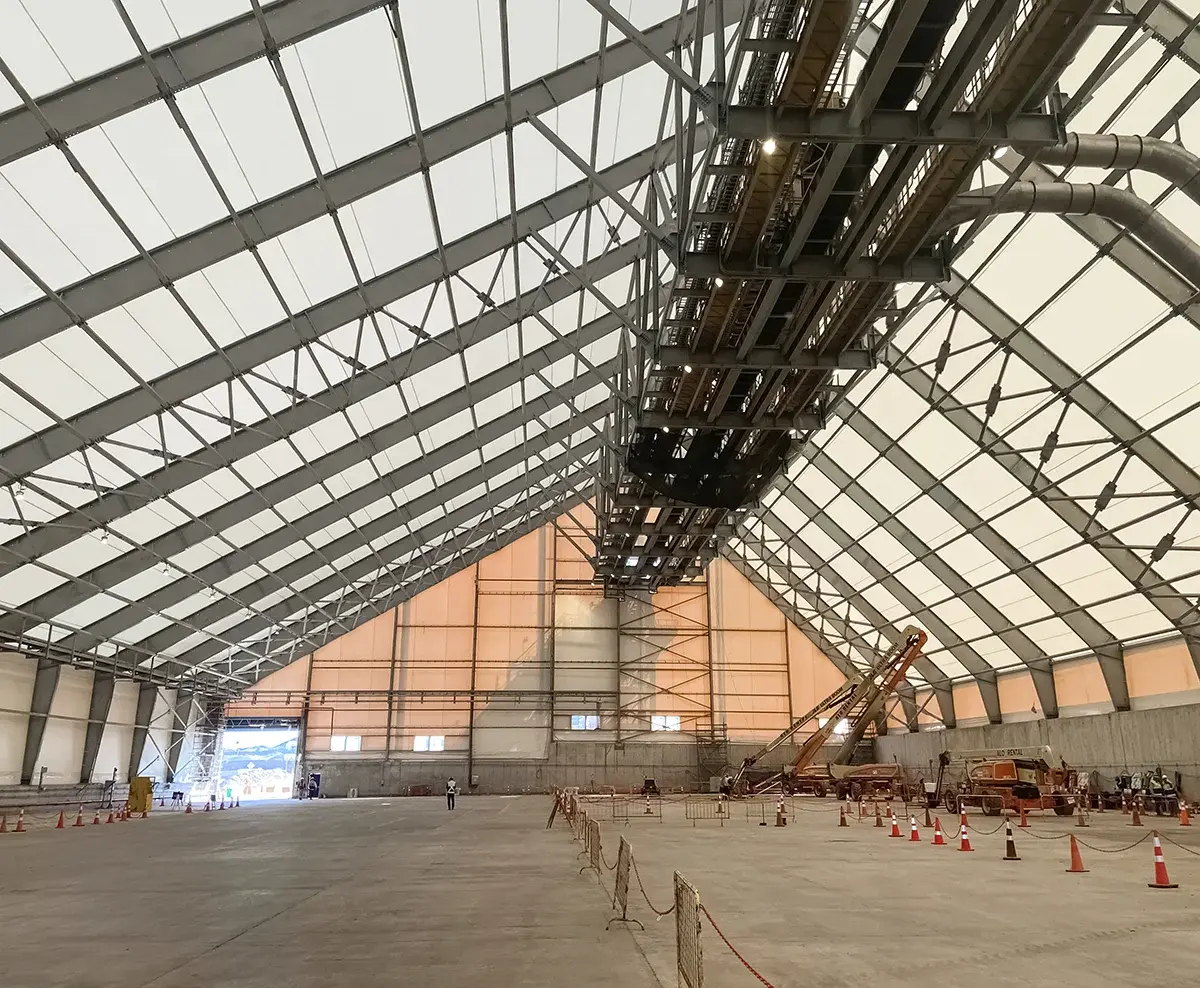
Engineered for Decades.
Harsh environments destroy traditional structures within 5-10 years. Our hybrid steel-and-PVC cladding approach extends lifespan, reduces maintenance frequency, and eliminates recurring replacement costs.
Break the
Replacement Cycle.
Traditional steel buildings in corrosive environments operate on a costly replacement cycle. Fertilizer dust penetrates hollow structural members, causing internal deterioration before visible damage appears. Salt exposure accelerates corrosion in structural components, particularly in open web trusses, metal cladding, and secondary framing members.
Legacy's engineered protection approach addresses durability at three levels: material selection, structural design, and coating systems. This integrated strategy extends building lifespan while reducing maintenance requirements and eliminating premature replacement.

Engineered Protection
Legacy's durability strategy integrates three protection layers: corrosion-inert materials, structural engineering that eliminates hidden failure points, and coating systems proven superior to industry-standard galvanizing.
-
ExxoTec™ PVC vs. Metal Cladding
ExxoTec™ PVC cladding is chemically inert to fertilizer, salt, ammonia, acids, bases, and industrial compounds—the material itself resists chemical attack without protective coatings. Metal cladding corrodes through chemical reaction with these same substances, requiring periodic recoating, eventual panel replacement, and continuous maintenance expenditure.
ExxoTec™ also absorbs and distributes impact energy—resisting hail strikes, equipment contact, and physical impact without denting, chipping, or cracking the way metal panels do. Heat-welded seams and Legacy’s patented tensioning system create a continuous membrane with no exposed fasteners, eliminating the thousands of potential leak points present in metal buildings.
-
ExxoTec™ Elite Exterior Cladding Performance
ExxoTec™ Elite is 28-oz. seven-layer PVC cladding—more than twice the strength of the 12-oz. polyethylene cladding used as the industry standard by most tension fabric building manufacturers. Independent laboratory testing confirms ExxoTec™ Elite retains 91% of its initial strength after years of continuous outdoor exposure—a retention rate that directly supports lifecycle cost analysis for owners evaluating 20- and 30-year operational horizons.
The cladding is rated for operating temperatures from −40°F to 158°F. Legacy buildings are engineered to meet site-specific wind and snow load requirements for any jurisdiction. Legacy holds Florida Product Approval #FL25658, earned through independent testing for wind uplift, projectile resistance, and water protection in high-velocity hurricane zones—one of the most stringent statewide certifications in the country.
ExxoTec™ Elite carries a 25-year warranty covering buildings in corrosive environments, including direct salt and fertilizer storage applications where no steel building can offer equivalent cladding coverage.
-
Low Maintenance, Self-Cleaning Surface
ExxoTec™ Elite’s smooth, non-porous PVC surface sheds dust, debris, and biological growth in rainfall. No scheduled repainting, no fastener inspection cycles, and no coating degradation to manage over time. The exterior surface rinses clean in rain or snow, or with cleaning methods recommended by Legacy staff.
-
Structural Engineering for Longevity
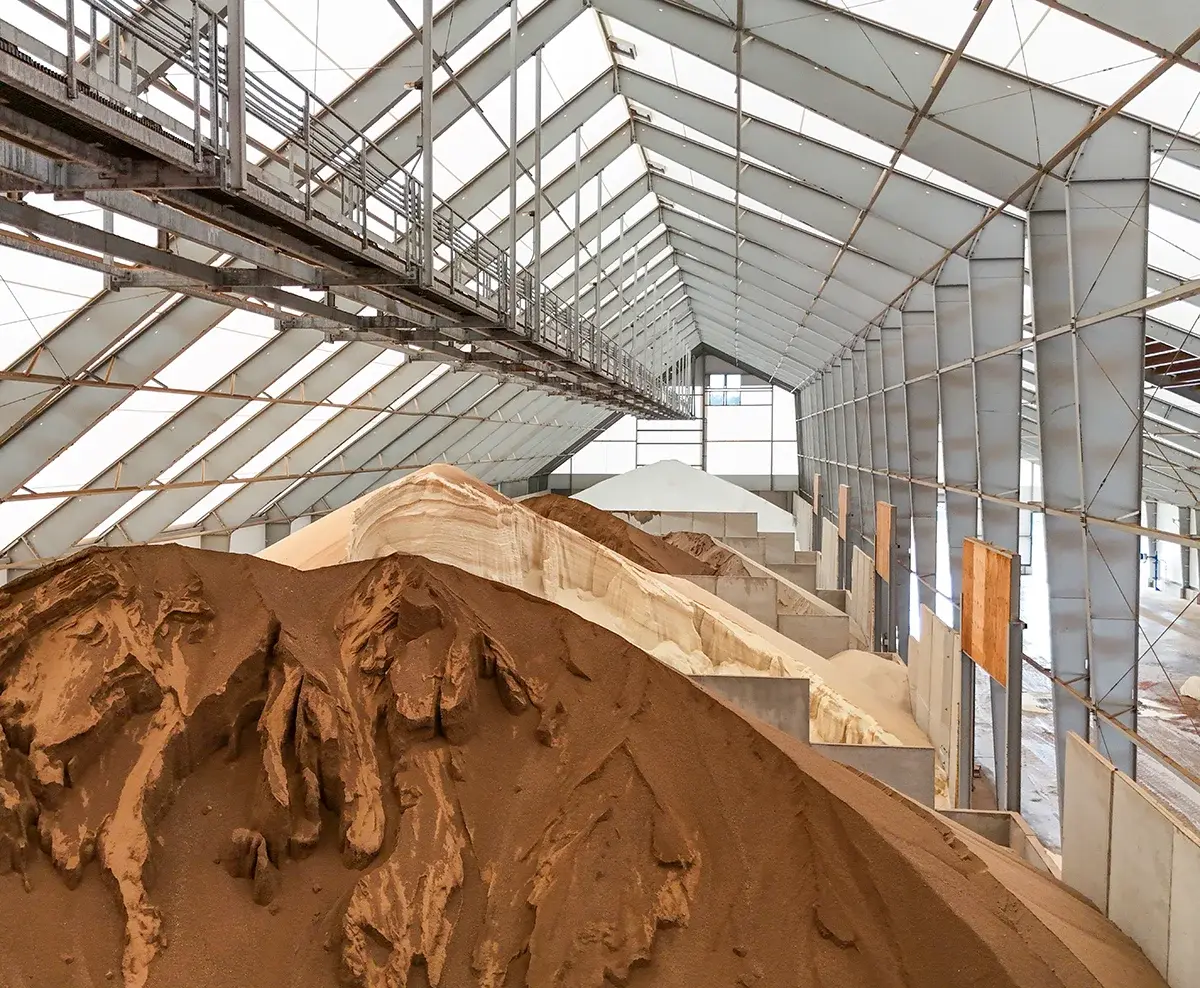
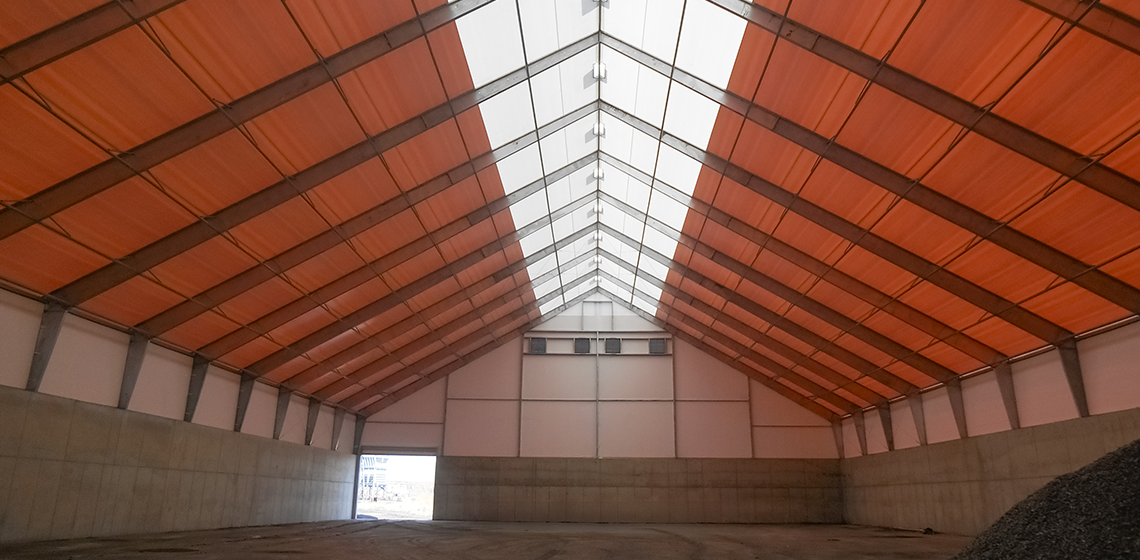
Legacy uses solid steel I-beams (55 ksi) rather than hollow web trusses. Hollow sections create internal spaces where moisture and corrosive particles accumulate invisibly until failure occurs. Solid I-beams eliminate hidden corrosion—all surfaces remain visible during inspection.
Web trusses suffer "chord plastification" where thin webs punch through tube walls, causing collapse. Solid construction eliminates this failure mode entirely.
Heavy load capacity: I-beam frames support cranes, overhead conveyors, mezzanines, and specialized equipment mounting—capabilities many competitors cannot match.
Clear span design: Spans exceeding 300 feet without interior columns enable full-height access for efficient loading, unloading, and equipment movement. Straight walls maximize racking space in bulk storage.
All Legacy buildings are designed to meet local codes and applicable industry standards including IBC, ASCE 7, and AISC. Legacy holds CSA A660 and AWS welding certifications. IAS AC472 certification is in progress.
-
EpoxxiShield™ Coating Systems
EpoxxiShield™: Single-layer polyamide epoxy, 4–5 mils thick — denser barrier protection than hot-dip galvanizing at 3.9 mils. Steel surfaces are shot-blasted before coating for maximum adhesion, and all purlins and tubular structural members are completely sealed before application to eliminate internal corrosion pathways. Suitable for coastal locations and mildly corrosive material environments. Up to 15-year coating system warranty.
EpoxxiShield™ COR: Multi-layer system achieving 13+ mils of barrier protection. Engineered for direct contact with salt, fertilizer, chemicals, and other highly corrosive materials—including zinc-reactive environments such as copper concentrate storage. Steel surfaces are shot-blasted before coating, and all purlins and tubular structural members are completely sealed before application. Suitable for marine terminals, mining operations, and other demanding corrosive environments. Up to 15-year coating system warranty.
Hot-dip galvanizing is available as an alternative for projects where specified.
-
Impact-Resistant Interior Liner
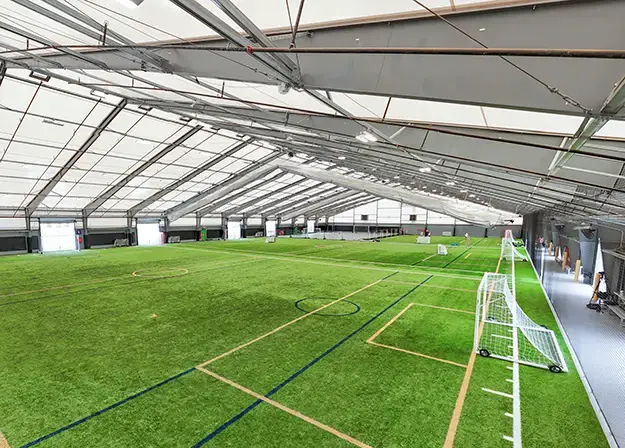
In insulated buildings, Legacy installs ExxoTec™ Pro as an interior liner, completing the building envelope and physically separating the steel frame from the occupied interior. At 41% stronger than standard 12-oz. PE cladding, ExxoTec™ Pro is built for environments where the interior surface takes regular physical contact: sports facilities with errant balls and equipment impacts, manufacturing spaces with forklifts and material handling, and occupied facilities where walls see daily use. All elements of Legacy buildings, including the frame, cladding, and attachment—have passed rigorous testing standards set by the state of Florida. Legacy buildings are approved for use in High Velocity Hurricane Zones (HVHZ).
Unlike painted drywall or corrugated metal liner panels, ExxoTec™ Pro absorbs and distributes impact rather than denting, cracking, or tearing. The surface is wipe-clean with no paint to chip, no panels to replace, and no hidden moisture accumulation behind wall assemblies.
Featured Projects
Featured Projects
Custom Fabric Structures for Agriland FS Woodbine
19,404 sq ft Fertilizer Storage Building | Woodbine, IA
Discover Legacy's fabric building design for Agriland FS Woodbine's fertilizer storage. Download the case study to explore this innovative project!
View ProjectsHull Coop
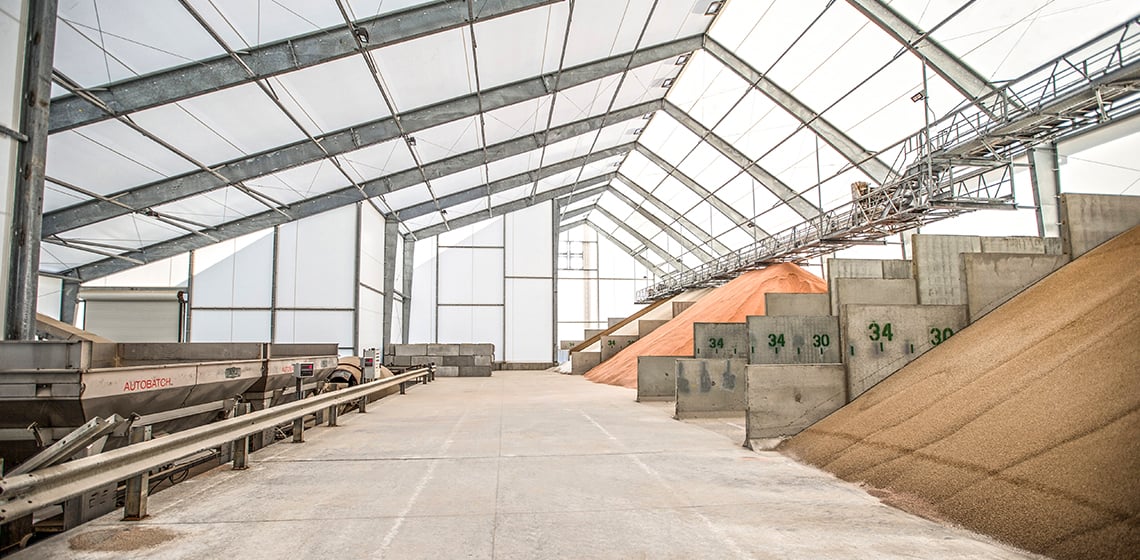
18,900 sq ft Fertilizer Storage Facility | Hull, IA
Hull Coop’s fabric building by Legacy delivers durable, weatherproof bulk storage, maximizing efficiency and protecting products from the elements.
View Projects
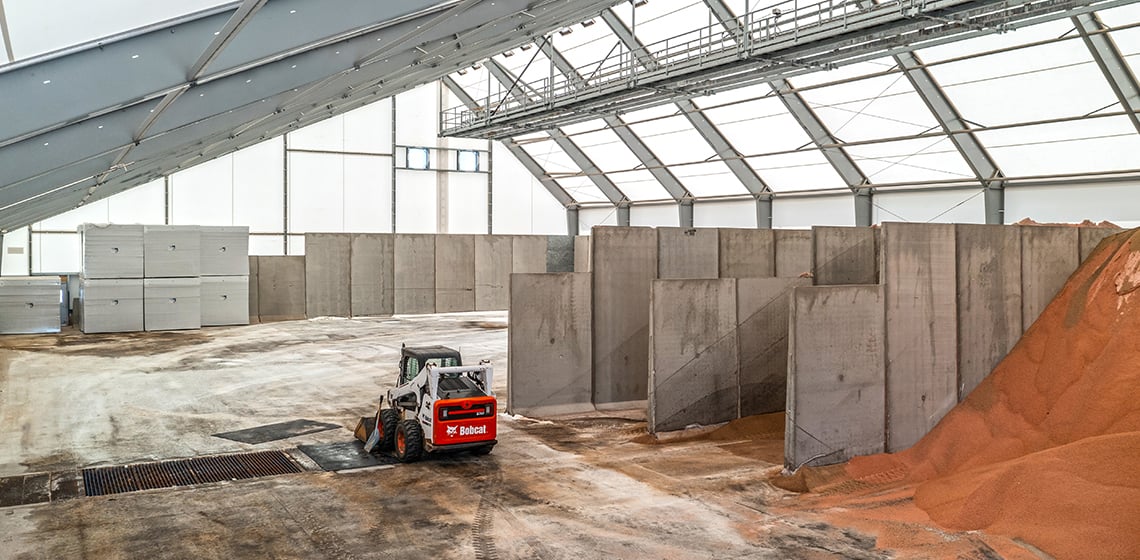
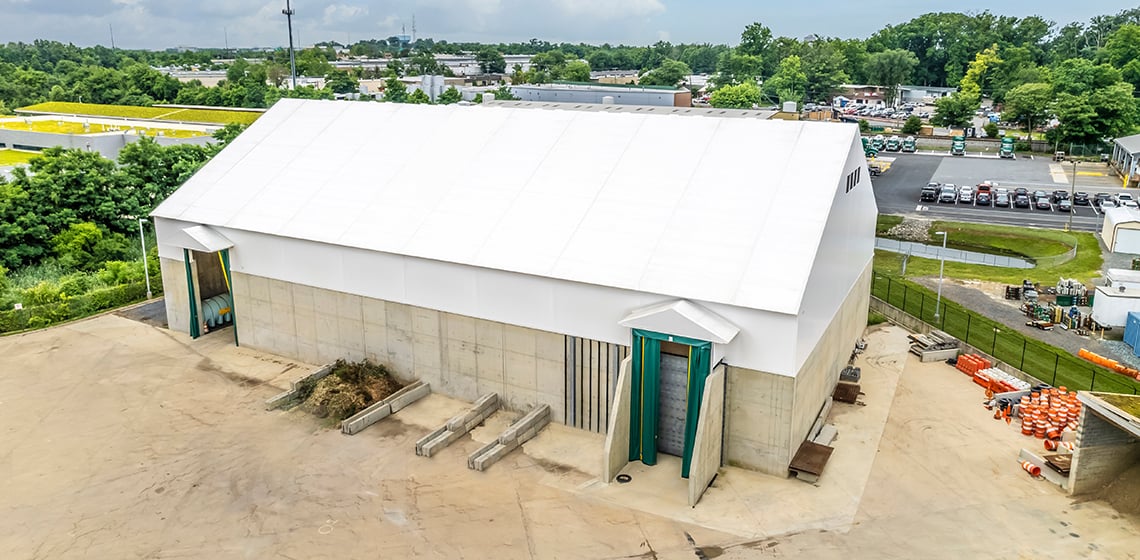
Montgomery County Salt
18,400 sq ft Municipal Salt Storage
Legacy built a salt storage facility in Gaithersburg, MD, with a 21-ft wall and EpoxxiShield™ COR Pro finish to protect frames from salt corrosion.
View Projects
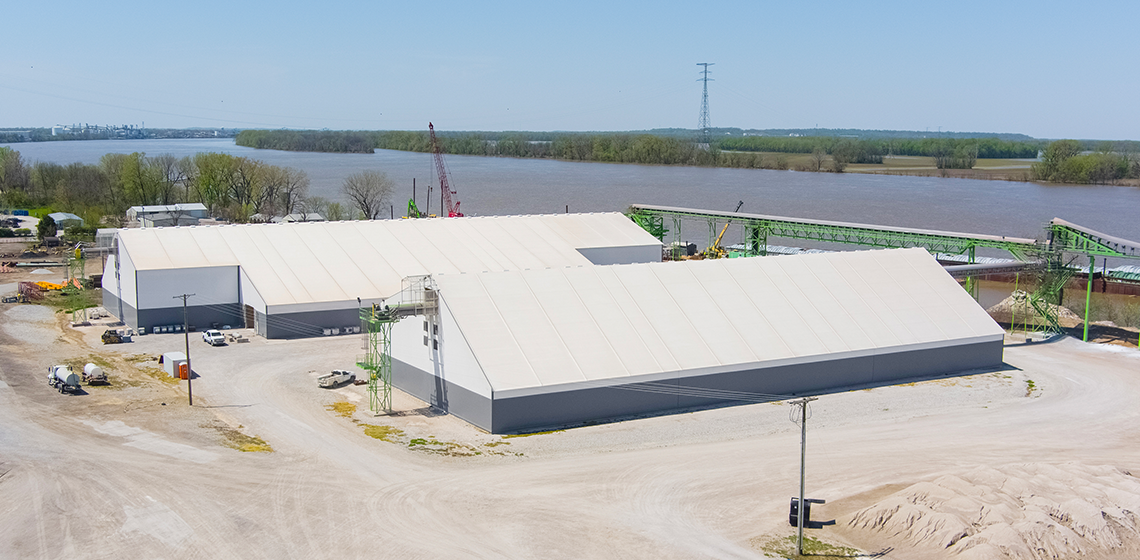
Castlen Steel
158,000 sq ft Fertilizer Storage Buildings
Two large fertilizer storage buildings, located along the Ohio River in Owensboro, Kentucky.
View Projects
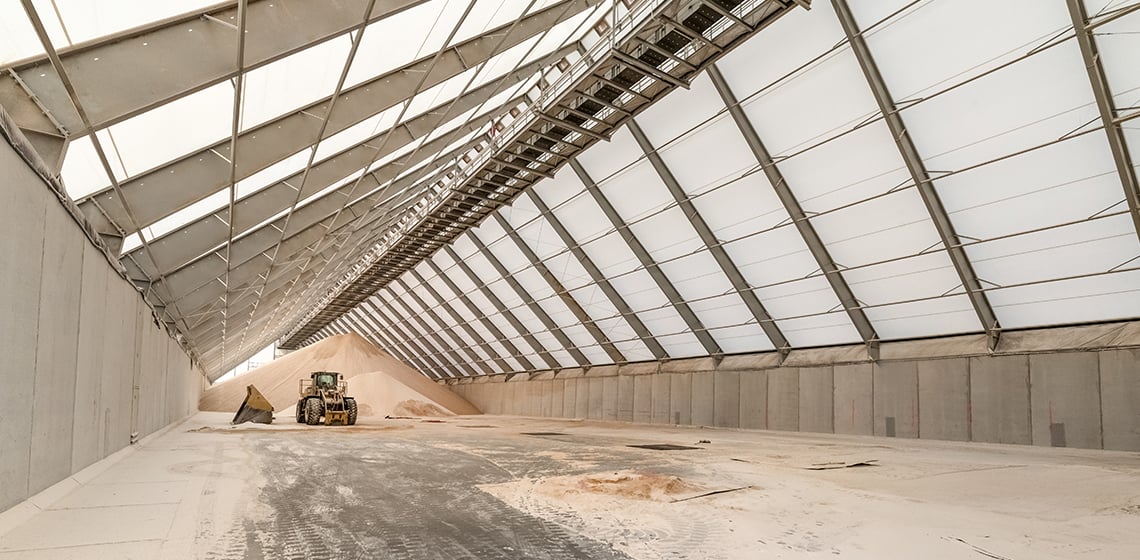
The DeLong Company, Inc.
69,600 sq ft DDGS Storage Facility
The DeLong Company and Legacy built a 69,600-ft DDGS export facility, opening Wisconsin to new agricultural markets.
View Projects
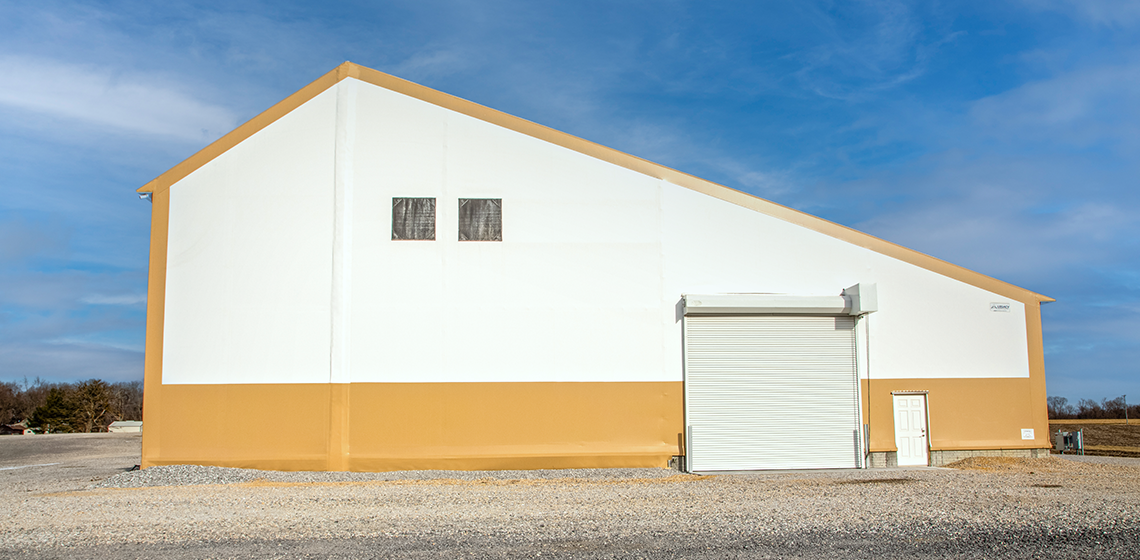
Paul Meyer Chemicals
10,080 sq ft Fertilizer Storage Facility
Legacy built a fertilizer facility in Walcott, IA, with overhead coil doors, conveyor support, and durable ExxoTec™ cladding.
View Projects
Feed Products & Bulk Feed Storage
62,800 sq ft Bulk Feed Storage Building | Madison, IL
Feed Products and Service expanded their Madison, IL location with a fabric structure to store and distribute bulk animal feed due to business growth.
View ProjectsFertilizer Storage Building for Northern Farmers Co-op
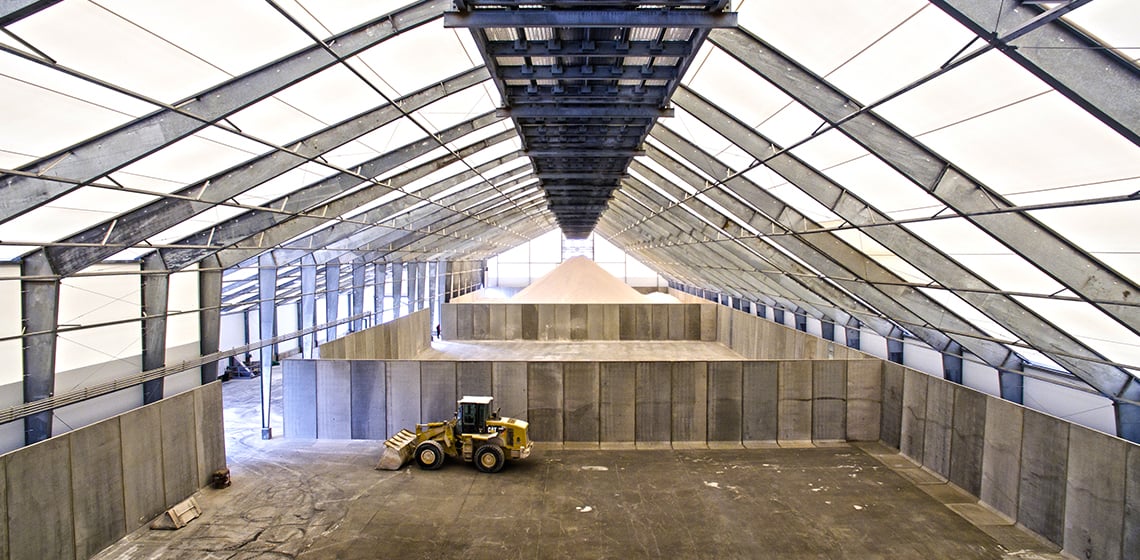
14,616 sq ft Fertilizer Storage Building | Williams, MN
Northern Farmers Co-op Fertilizer Storage: Custom fabric buildings for efficient storage. Explore our innovative design options.
View Projects
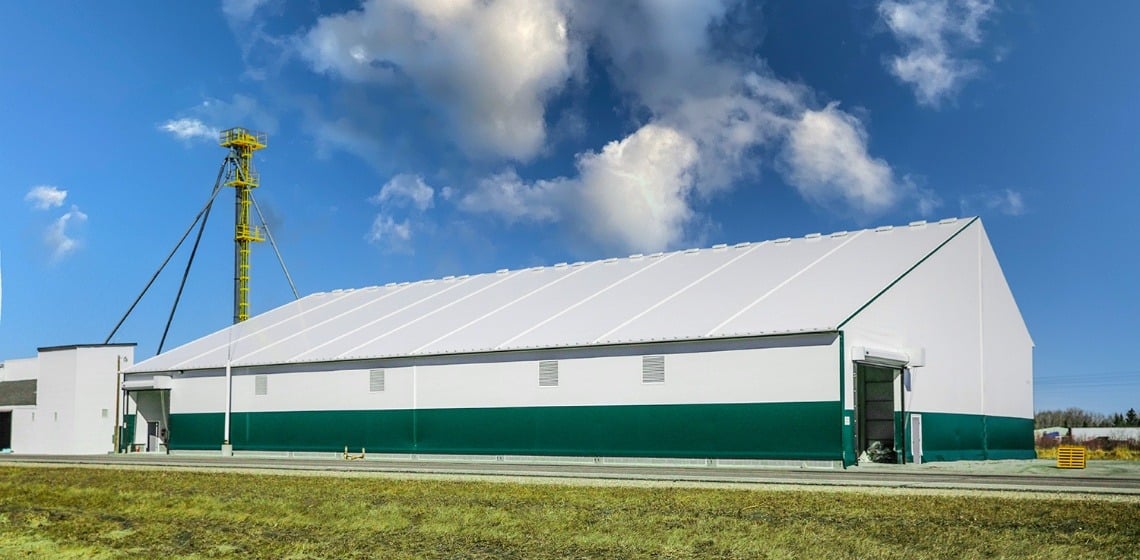
Gunther Salt Company Salt Storage Building
28,080 sq ft Commercial Salt Storage Building | St. Louis, MO
Gunther Salt Company built a new storage facility in St. Louis for agricultural salt mix, arriving by barge and loaded onto trucks via conveyor.
View ProjectsIEI Barge Services Storage Building
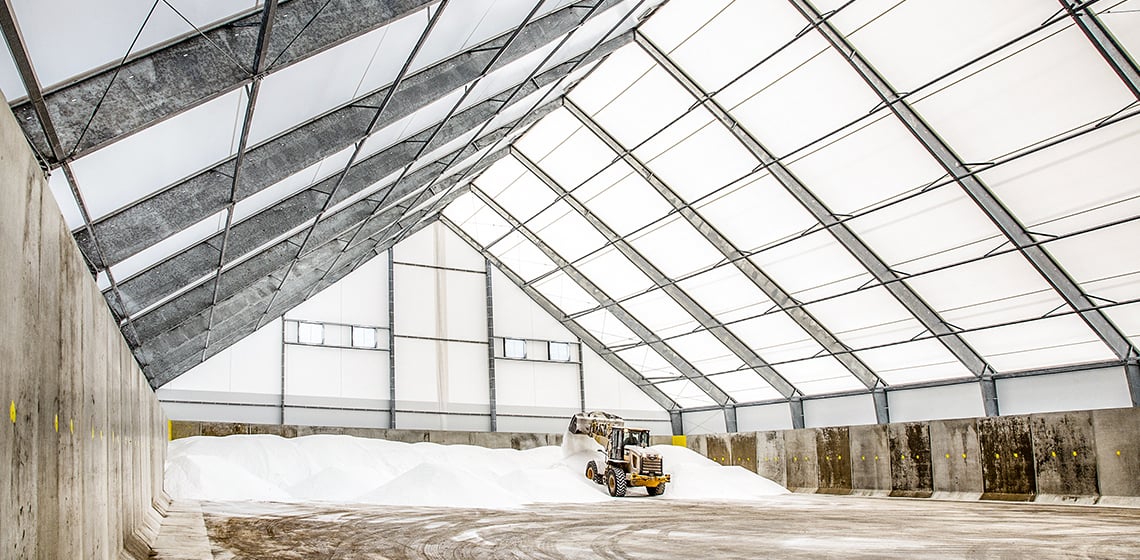
63,010 sq ft Tension Fabric Building for Fertilizer Storage and Blending | East Dubuque, IL
In 2015, IEI Barge Services chose Legacy’s lightweight design for a fertilizer storage building, solving soil and corrosion challenges affordably.
View ProjectsTronson Grain Fertilizer Storage
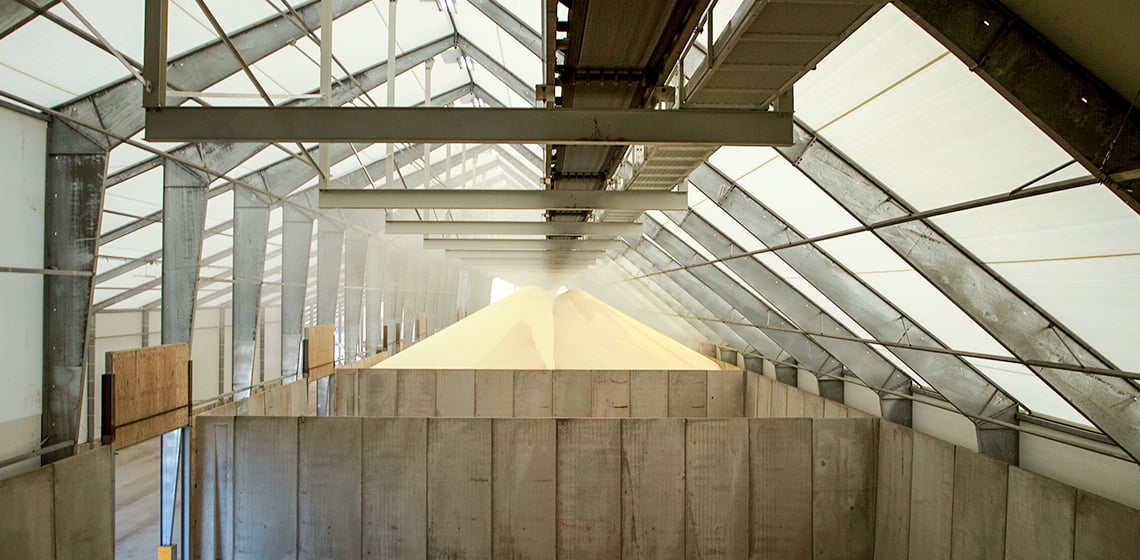
37,200 sq ft Fertilizer Storage
Legacy built a fertilizer storage facility for Tronson Grain Storage in Crary, ND, featuring Bulk Grain Storage with multiple bins and a 150-ton system.
View Projects
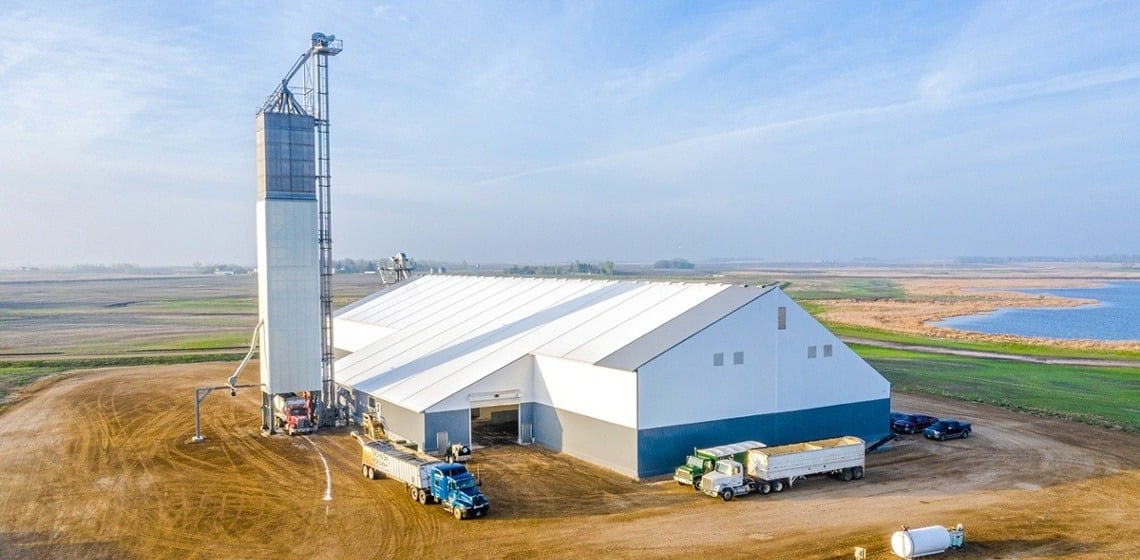
Versatile Transload Building Solutions for Bulk Commodity
101,520 sq ft Salt Storage + Distribution at a Railroad Transload Facility
Vermont Railways, Inc. was looking to develop a new state-of-the-art rail-to-truck transload building to efficiently handle bulk commodities
View Projects
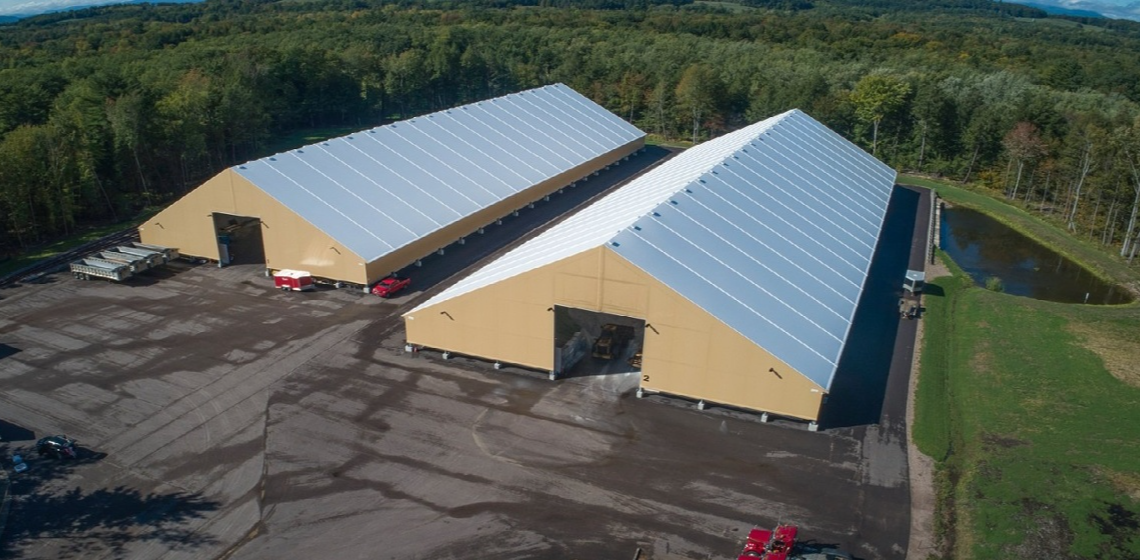
Smithfield Bulk Feed Storage & Distribution
60,000 sq ft Flat Feed Storage
The largest hog producer and processor increased their feed manufacturing system with a tension fabric building.
View Projects
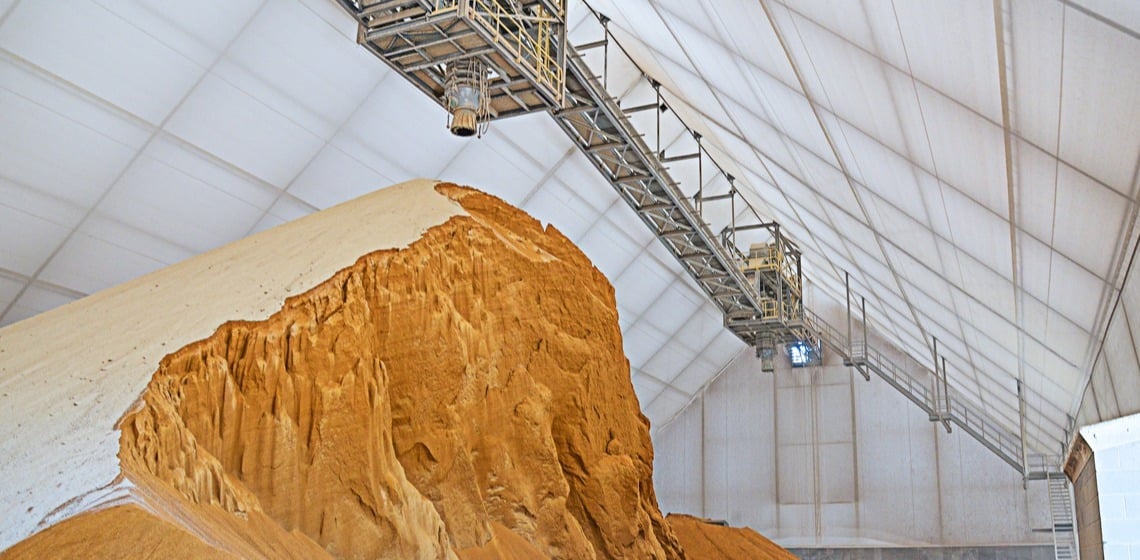
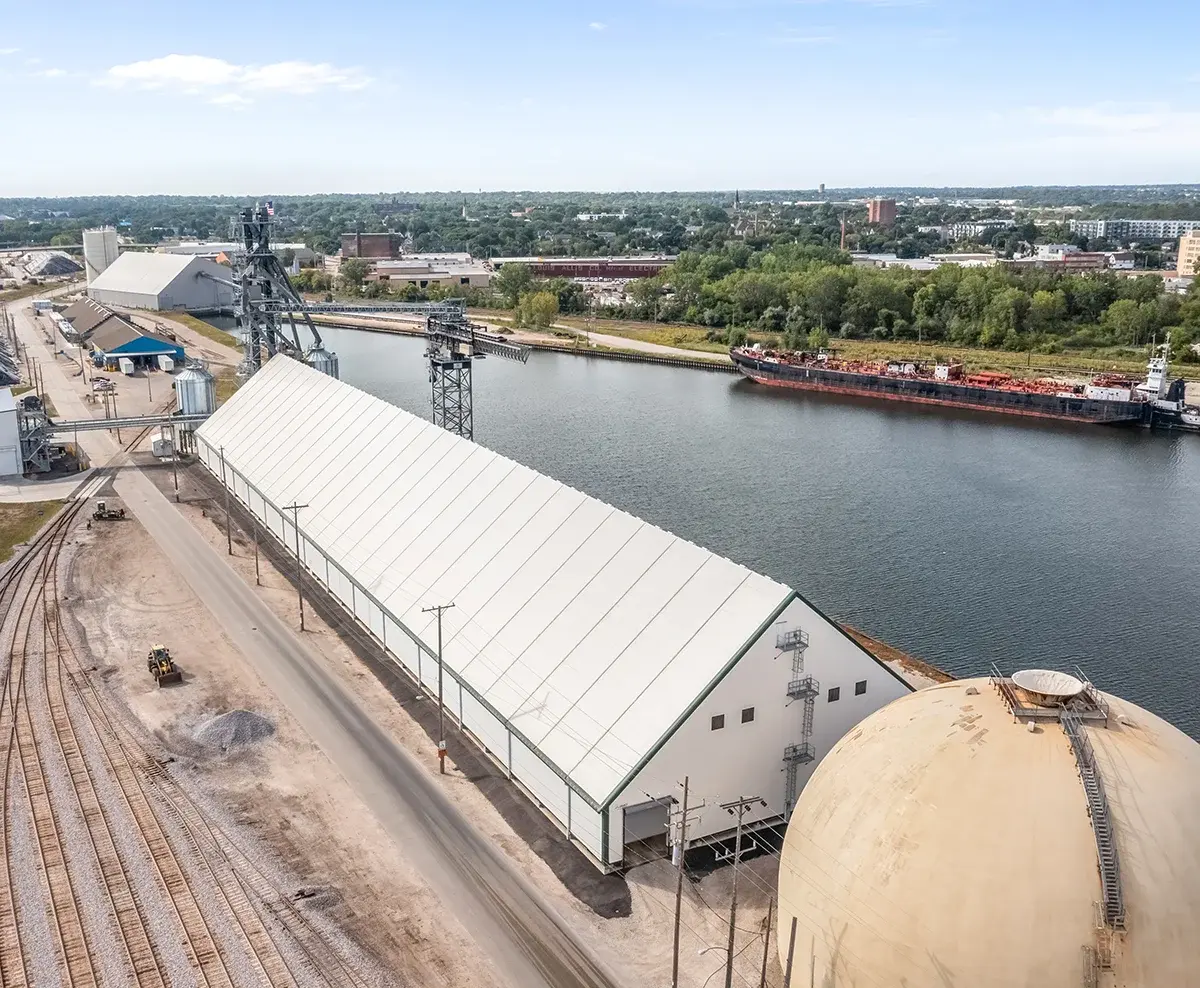
Beelman River Terminal - Chicago
45,000 sq ft Commodity Storage & Transloading
Beelman River Terminal - Chicago is a 45,000 sq ft commodity storage and translating building, located at a river terminal along the Chicago River.
View Projects
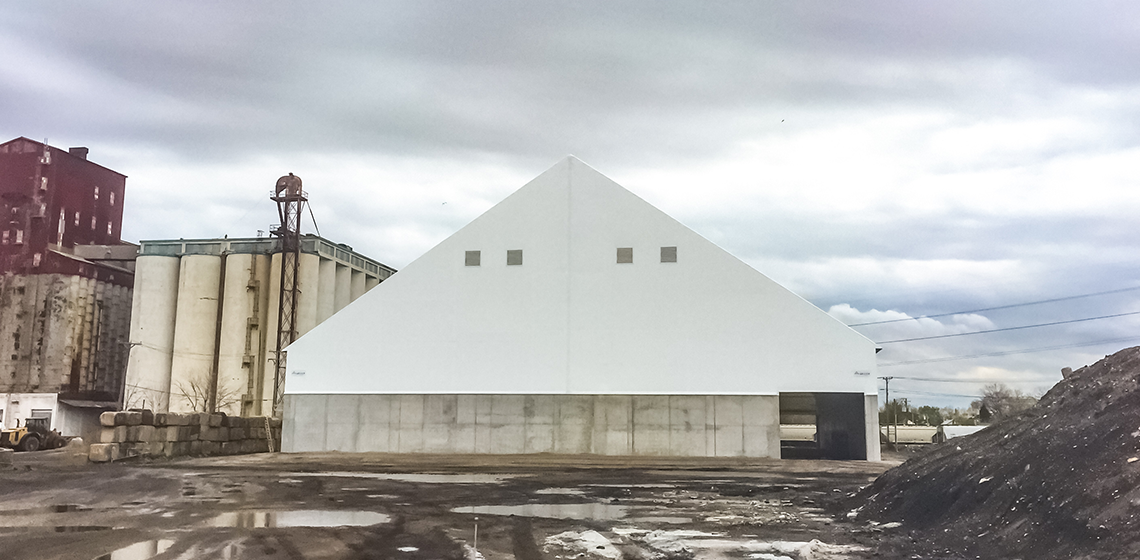
Beelman River Team - Venice
44,200 Bulk Corrosive Storage
Beelman River Terminal - Venice is a 44,200 sq ft bulk corrosive storage building, located at a river terminal in Venice, IL.
View Projects
Additional Resources
FAQs
-
How does PVC cladding resist corrosion if it's not metal?
PVC cladding is chemically inert to the substances that corrode steel—fertilizer, salt, acids, bases, and mineral compounds. These materials cannot degrade the cladding because they don't react with PVC's molecular structure. This is fundamentally different from metal buildings where corrosion is a chemical reaction between the material and its environment.
The cladding's smooth surface also prevents accumulation of corrosive materials. Any dust or residue rinses clean in rain or snow, or with recommended cleaning methods.
-
What makes solid I-beams more durable than hollow web trusses?
Hollow web trusses create internal spaces where moisture and corrosive particles accumulate undetected. Internal corrosion progresses invisibly until structural failure occurs. Solid I-beams eliminate these hidden corrosion spaces—any surface degradation remains visible during routine inspection, allowing early intervention before structural compromise.
Additionally, web trusses are vulnerable to "chord plastification," where thin steel webs punch through tube walls, leading to instability. Solid I-beam construction eliminates this failure mechanism entirely.
-
Can existing galvanized buildings be retrofitted with EpoxxiShield™?
Retrofit feasibility depends on the existing structure's condition. Our engineering team evaluates structural integrity and coating adhesion potential on a case-by-case basis. However, most facilities with advanced corrosion find replacement more cost-effective than retrofit because hidden damage inside hollow members cannot be reversed through coating alone.
-
What maintenance does EpoxxiShield™ require?
Annual visual inspection to identify any physical damage from equipment contact or unusual conditions. If localized damage occurs, spot repair with matching epoxy coating restores protection. Unlike galvanizing, EpoxxiShield™ does not require periodic re-coating or replacement under normal conditions.
The exterior's smooth surface rinses clean in rain or snow, or with cleaning methods recommended by our staff. This minimal maintenance requirement significantly reduces long-term operational costs.
-
How do I choose between EpoxxiShield™ and EpoxxiShield™ COR?
Material stored and environmental severity determine the appropriate protection level. Our engineering team provides application assessment based on:
- Chemical composition of stored materials
- Coastal proximity and salt exposure intensity
- Ventilation conditions and humidity levels
- Operational requirements and expected lifespan
Facilities storing highly reactive materials (fertilizer, certain minerals) or operating in severe coastal conditions typically specify EpoxxiShield™ COR for maximum protection.
-
What about materials that react with zinc coatings?
Copper concentrate and certain other minerals chemically react with zinc in galvanized coatings, accelerating rather than preventing corrosion. EpoxxiShield™ COR can be formulated without zinc-rich primers for these specific applications—something impossible with hot-dip galvanizing which requires zinc for its protective mechanism.
This customization capability allows Legacy buildings to operate effectively in applications where traditional galvanized structures fail rapidly.
-
Do PVC cladding buildings require more frequent maintenance than metal buildings?
No. They typically require less maintenance than metal buildings because:
- No fastener holes mean no moisture entry points requiring periodic seal inspection/replacement
- No coating degradation requiring scheduled repainting
- Self-cleaning surface eliminates manual cleaning requirements
- Corrosion-inert materials eliminate the primary maintenance driver in harsh environments
The exterior's smooth surface rinses clean in rain or snow, or with cleaning methods recommended by Legacy staff.
-
How do hanging loads affect building durability?
Properly engineered, hanging loads do not compromise durability. Legacy's solid I-beam construction is specifically designed to support cranes, conveyors, mezzanines, and other operational equipment. During the design process, our engineering team calculates all collateral loads (HVAC, lighting, sprinklers) and hanging loads into the roof-load specifications.
The critical difference is engineering foresight—loads determined during initial design can be accommodated without compromising structural integrity or longevity. Retrofitting heavy loads onto buildings not designed for them creates stress concentrations that accelerate failure.
-
What wind loads can Legacy buildings withstand?
Each Legacy building is custom-engineered to the wind and snow load requirements of its specific location and jurisdiction. Legacy buildings have been designed for extreme-condition environments. Florida Product Approval #FL25658 confirms the system has been independently tested to meet Florida's high-velocity hurricane zone requirements, which exceed most other state standards.
-
How does ExxoTec™ Elite perform over time compared to metal cladding?
Metal cladding corrodes, requires periodic recoating or replacement, and can fail at fastener points where moisture infiltrates. ExxoTec™ Elite doesn't corrode—the material is chemically inert—and independent testing shows it retains 91% of its initial strength after 13 years of outdoor exposure. The 25-year warranty covers buildings in corrosive environments, including direct salt and fertilizer storage, where steel buildings cannot offer any cladding warranty.
Reduce Your
Replacement Frequency
Our specialists can evaluate your specific conditions—stored materials, environmental factors, operational requirements—to recommend the appropriate protection system for maximum lifespan and minimum lifecycle cost.


