IAS AC472 Accreditation | Legacy Building Solutions
When selecting a building manufacturer, it's easy to compare building sizes, pricing, and features. But some of the most important differences happen...
Building configurations organized by industry, use case, and site conditions.

See how Legacy buildings perform with durability, space, environment, and design.
Environmental PerformanceDocumentation and resources for architects, contractors, engineers,
and project owners.

Technical guides, case studies, and industry analysis for every project stage.
Projects
Legacy designs, manufactures, and installs
complete building systems under one contract.

2 min read
Legacy Building Solutions Marketing Updated on August 14, 2026
We’ve seen the effects of corrosion on many steel buildings, and one thing is for sure: hot-dip galvanizing (HDG) doesn’t prevent corrosion. It just delays it for a few years.
In fertilizer plants, salt sheds, and mining facilities, the zinc coating that protects hot-dip galvanized steel wears through in five to seven years. When it does, the bill comes due: new steel, lost production time while crews demolish and rebuild, and product contaminated by rust flaking into stored materials.
That’s why we started moving away from HDG for corrosive environments years ago. In our view, EpoxxiShield™ offers a better solution.
HDG works by sacrifice: the zinc coating corrodes so the steel doesn't have to, at least until the zinc runs out. EpoxxiShield™, our proprietary epoxy coating system, instead forms a continuous barrier between the steel and whatever is trying to corrode it—dust, chemicals, salt, moisture—so nothing reaches the metal in the first place.
Two details separate HDG from EpoxxiShield™ coating:
We didn't take this on faith. An independent lab exposed EpoxxiShield™ COR and HDG samples to more than 2,000 hours of continuous salt fog. The EpoxxiShield™ samples showed 0.01% or less surface corrosion. The HDG samples showed rust across 1% to 10% of the surface.
Read full study: EpoxxiShield™ vs. Hot-Dip Galvanizing: Corrosion Protection Performance Data
We also back the frame and finish with a 15-year warranty, and our buildings are engineered to perform even longer than that.
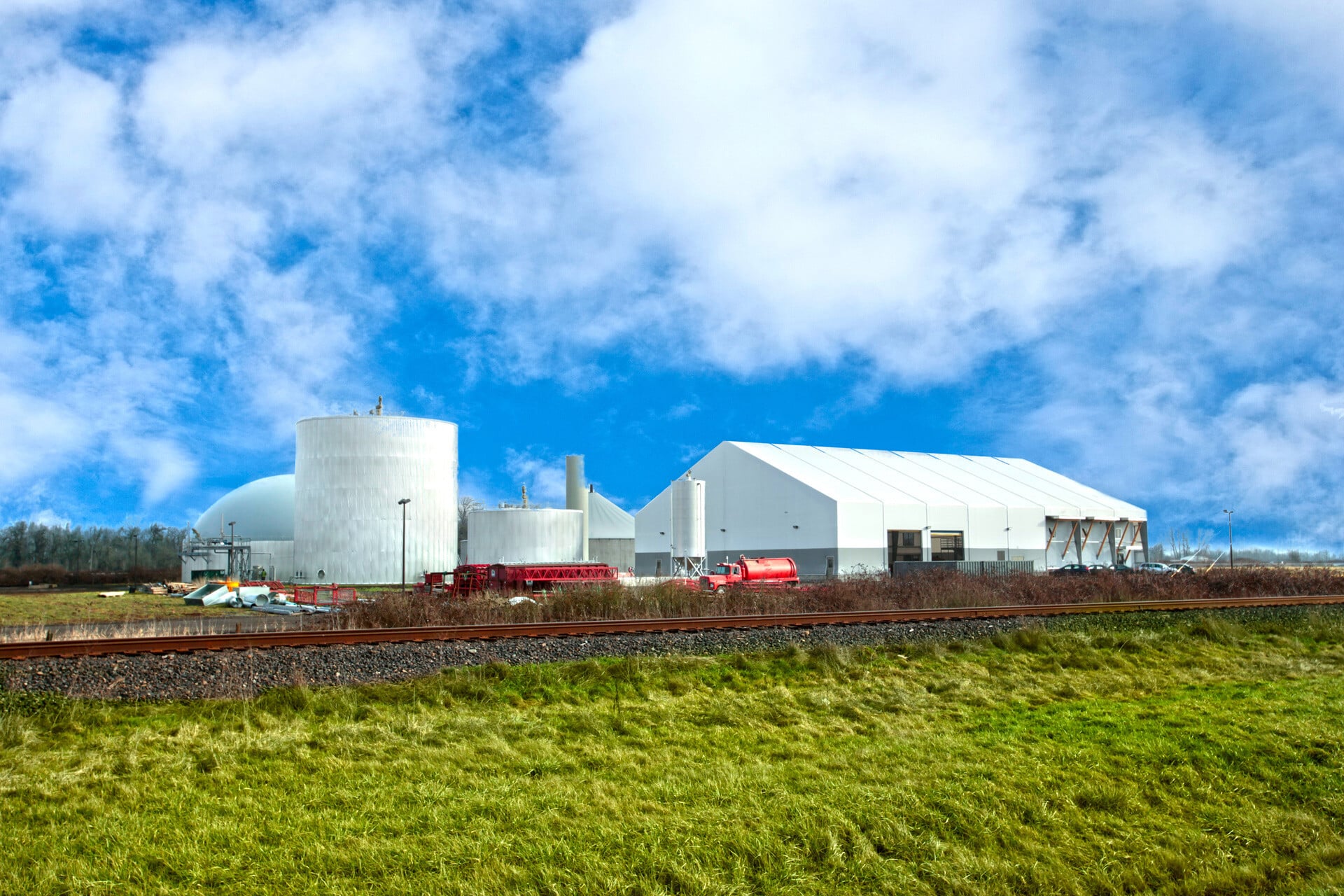
There's a lot of chemistry happening in the fertilizer storage facilities we build. Conveyors, mixing towers, and constant dust create conditions that wear away steel fast. Fertilizer dust is particularly corrosive, and it attacks steel both chemically and physically. EpoxxiShield™ creates a barrier against both.
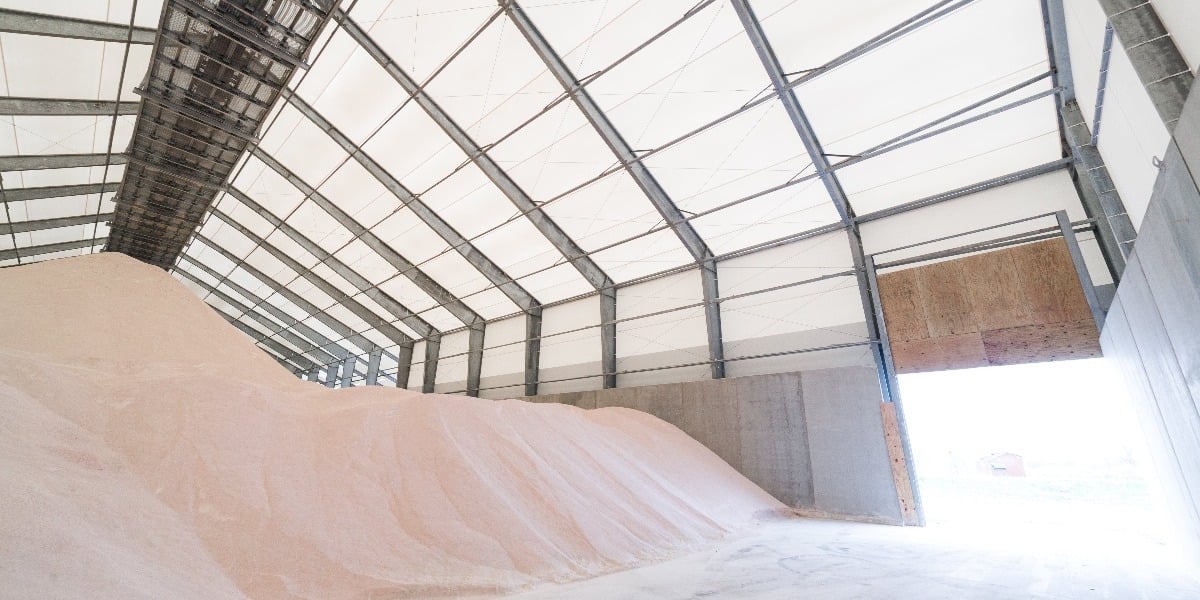
Anyone in the snow belt knows salt and rust travel together. Cities, counties, and states that store road salt need to keep it out of the weather while protecting the steel structure around it. We've been building salt storage structures for years, and we've learned a lot about keeping a frame protected against constant salt exposure.
Mine site chemicals are especially corrosive—we saw this firsthand with a salt mine in Kansas. We first started testing epoxy coatings at that Kansas site. Later, in Chile, we built a storage structure for copper concentrate, a material that reacts chemically with the zinc in galvanized coatings. HDG isn't even an option there; EpoxxiShield™ is.
When you buy a storage building, you're buying for decades, not years. Our buildings pair the toughest PVC cladding available with a solid steel frame protected by an EpoxxiShield™ coating built for the environment.
Start your project by contacting our team. We’ve got you covered.
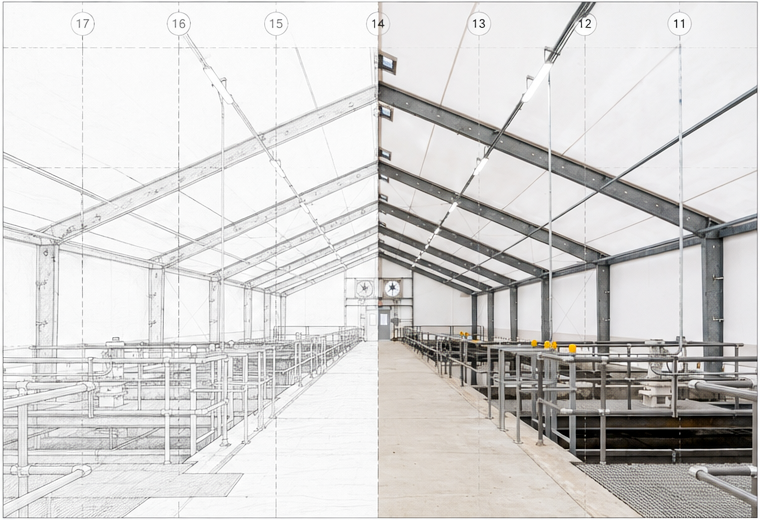
Corrosion protection starts with the steel frame. A continuous barrier coating like EpoxxiShield™ keeps corrosive materials away from the metal. Passive ventilation reduces the humidity that speeds up corrosion, and a PVC cladding liner adds a second layer of protection in the most aggressive environments. Solid I-beam frames help too, since they don't have the hidden interior surfaces where corrosion can start unseen inside hollow tube framing.
Galvanizing protects steel with a sacrificial zinc coating that corrodes in place of the steel, then runs out. EpoxxiShield™ is a barrier coating that keeps corrosive elements off the steel entirely, with no sacrificial layer to deplete. In independent lab testing under identical salt fog exposure, EpoxxiShield™ outperformed HDG by a wide margin—see the full test results here.
Hot-dip galvanizing only delays corrosion. In fertilizer plants, salt sheds, and mining sites, the zinc coating wears through in five to seven years.
EpoxxiShield™ is a barrier coating, not a sacrificial one. It closes the gaps where HDG typically fails first, a difference confirmed under more than 2,000 hours of independent salt fog testing.
One building protected with EpoxxiShield™ can outlast two or three HDG replacement cycles, without the downtime or contamination risk that comes with rebuilding.
When selecting a building manufacturer, it's easy to compare building sizes, pricing, and features. But some of the most important differences happen...
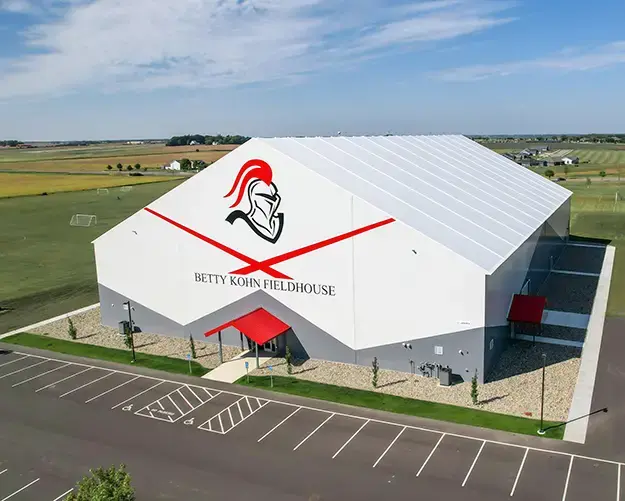
As specialty building systems gain traction across municipal, industrial, aviation, and recreational markets, more general contractors are managing...
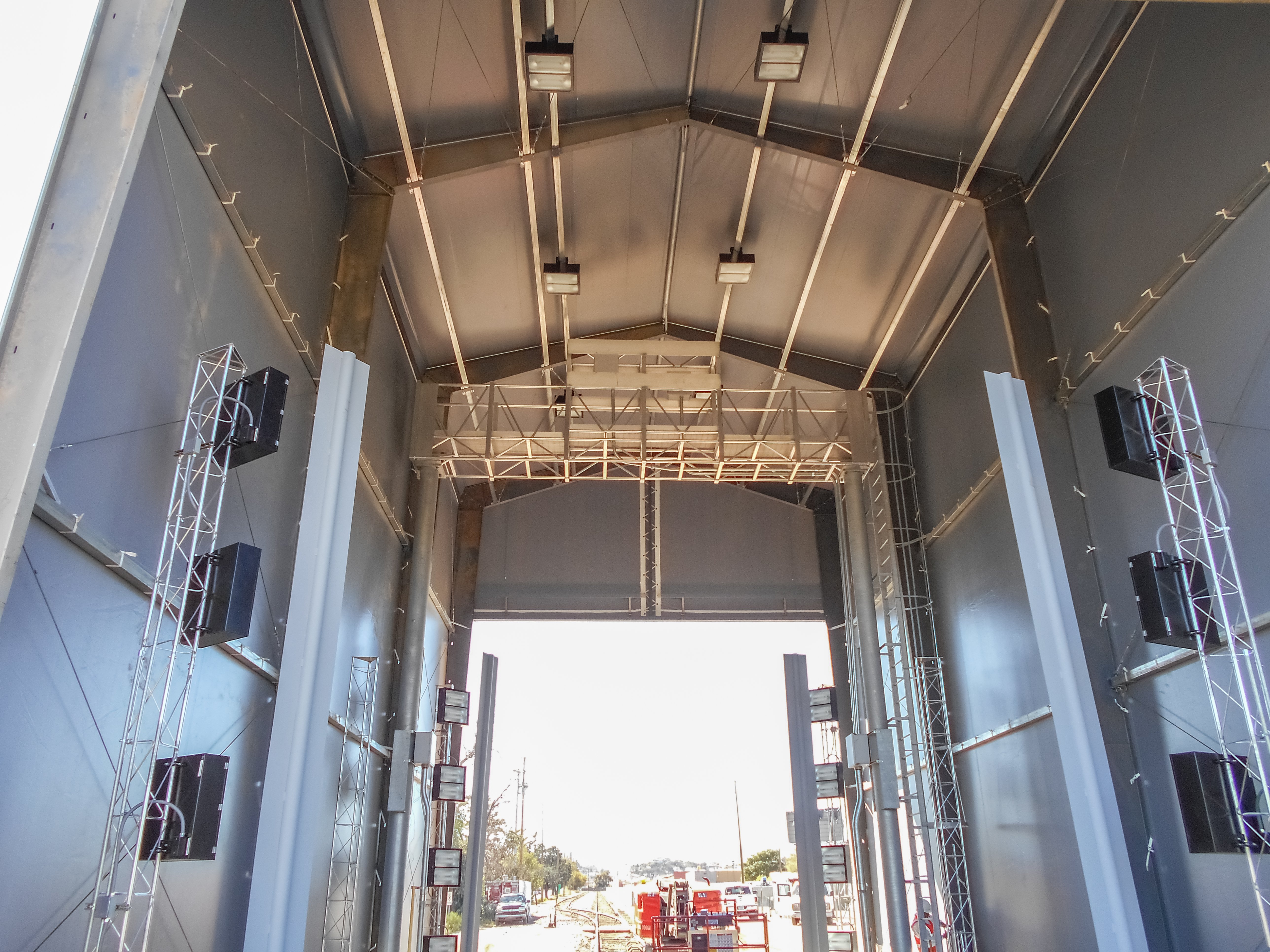
The future of industrial construction is entering a new era, with the future defined by speed, flexibility, and smarter choices. Looking ahead in...