How Independent Testing Validates the Performance of Legacy PVC-Clad Buildings
When evaluating a building envelope, performance should be measured, not assumed. Independent testing provides building owners with measurable data...
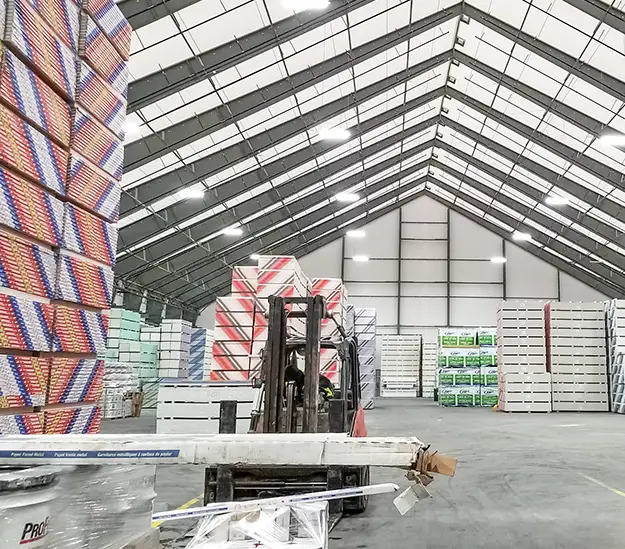
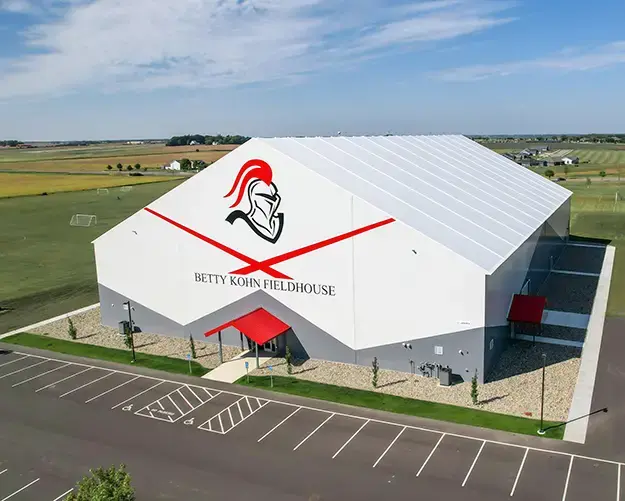
Open, enclosed, and insulated configurations for facilities across sports, agriculture, and general use.
Purpose-built for industrial and corrosive environments where standard coatings and structures fall short.
3 min read
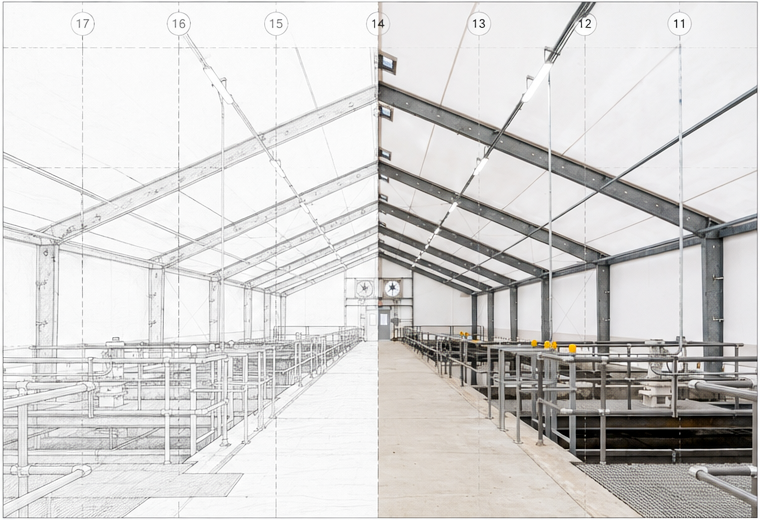
As specialty building systems gain traction across municipal, industrial, aviation, and recreational markets, more general contractors are managing projects that include tension fabric or hybrid fabric structures. But not all providers operate the same and success often depends on choosing a partner that offers value engineering building solutions and understands Fabric Structure vs conventional construction.
For GCs, the ideal provider should function as more than a supplier. They should act as a collaborative project partner that supports coordination, simplifies communication, reduces risk, and helps keep the project on schedule. These are key traits to look for when evaluating fabric building manufacturers and selecting a reliable fabric building partner for general contractors.
At Legacy Building Solutions, rigid steel frame and tension fabric systems are engineered for permanent use and supported by a vertically integrated process designed to help contractors deliver projects efficiently and confidently. Our team provides value engineering support and guidance throughout the process, helping contractors evaluate fabric structures alongside conventional construction options.
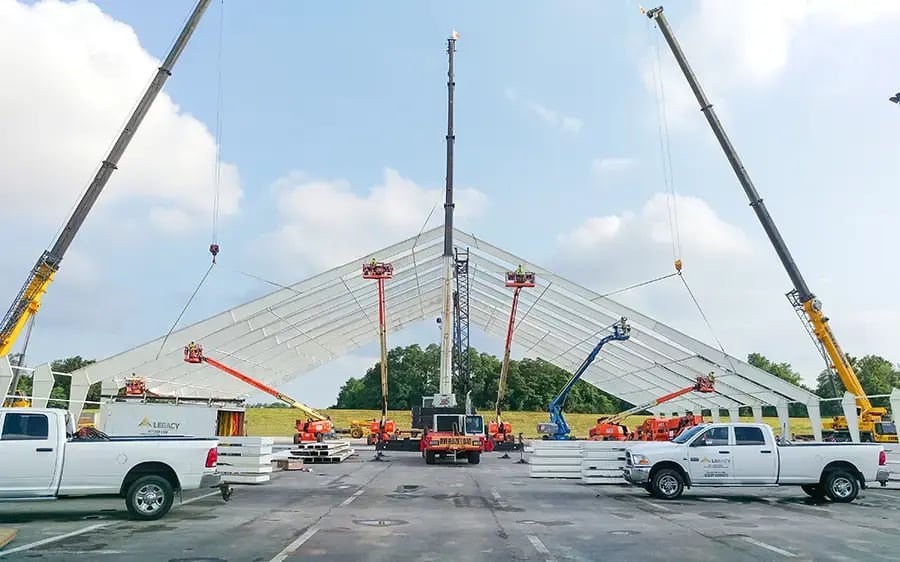
Specialty structures can introduce unique coordination requirements. Building geometry, foundations, equipment clearances, crane requirements, utility integration, and site constraints all need to align early. Especially in large equipment storage building needs or low-maintenance industrial buildings.
When coordination happens early and consistently, GCs can avoid costly field modifications and schedule disruptions. A knowledgeable fabric building partner for general contractors can also help owners and project teams better understand permanent tension fabric construction and how hybrid fabric buildings differ from other building systems.
One of the most overlooked factors in construction is installation quality.
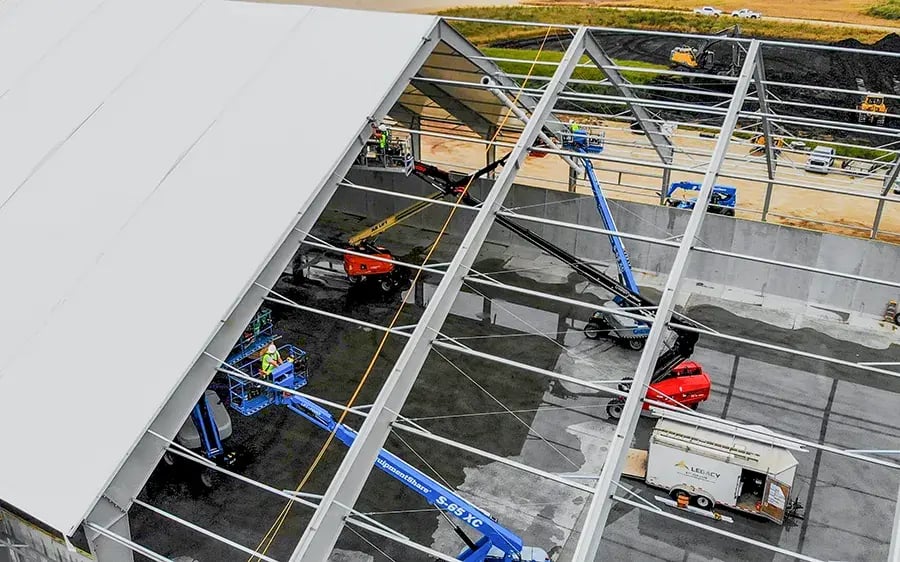
Unlike conventional systems, tension fabric structures require specialized expertise to ensure proper membrane tensioning, alignment, weatherproofing, and long-term performance. Experienced installation is an important consideration when comparing fabric structures with conventional construction, especially for facilities where durability and low maintenance are priorities.
Factory-trained installation crews provide several advantages:
For GCs, that translates into lower project risk and greater confidence the structure will perform as intended, whether it’s a large equipment storage building another specialized industrial facility.
Municipal and public works projects often include specific procurement requirements. From bid specifications and engineering documentation to RFQs and compliance standards, the process can become time-consuming without the right support.
An experienced fabric building partner should help teams:
Early involvement from specialty partners helps reduce ambiguity, improve project clarity, and address common questions from owners, engineers, and contractors, such as: Are tension fabric buildings permanent? What is a hybrid fabric building?
Fragmented responsibility can create delays, change orders, and finger-pointing. A vertically integrated approach can help reduce those challenges by bringing key project functions under one organization.
When engineering, manufacturing, project management, and installation work under one organization, it can help:
For GCs managing multiple subs and priorities, single-source support reduces administrative burden and construction risk while supporting value engineering throughout the project.
Contractors face pressure to deliver faster, safer, more cost-effective projects while navigating labor shortages and supply chain challenges. Understanding the differences between fabric structures and conventional construction, and selecting an experienced building partner, can provide a meaningful advantage.
Choosing the right partner makes a measurable difference, particularly for low-maintenance industrial buildings and large equipment storage facilities.
The best providers don’t just deliver materials. They become an extension of the team. Supporting coordination, reducing uncertainty, improving installation quality, and helping navigate every stage. In short, a trusted fabric building partner for general contractors can address questions like: "Are tension fabric buildings permanent?" and "What is a hybrid fabric building?" while delivering value engineering building solutions.
For GCs looking to streamline specialty projects and deliver long-term value, choosing the right building partner matters. Experienced fabric building manufacturers can help teams evaluate fabric structures against conventional construction, navigate project requirements, and deliver a facility designed for long-term performance.
When evaluating a building envelope, performance should be measured, not assumed. Independent testing provides building owners with measurable data...
When selecting a building manufacturer, it's easy to compare building sizes, pricing, and features. But some of the most important differences happen...
As specialty building systems gain traction across municipal, industrial, aviation, and recreational markets, more general contractors are managing...