Industrial Buildings Engineered Around the Operation
Industrial operations don't adapt well to one-size-fits-all buildings. Modern industrial fabric buildings are engineered to serve the operation,...
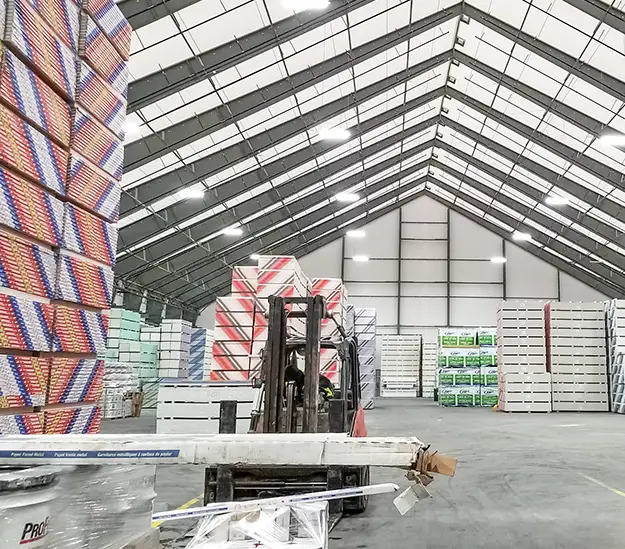
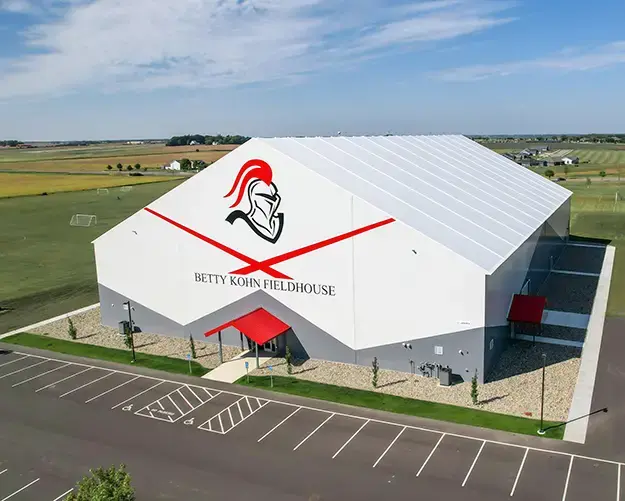
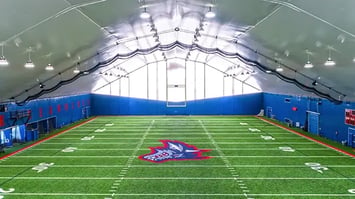
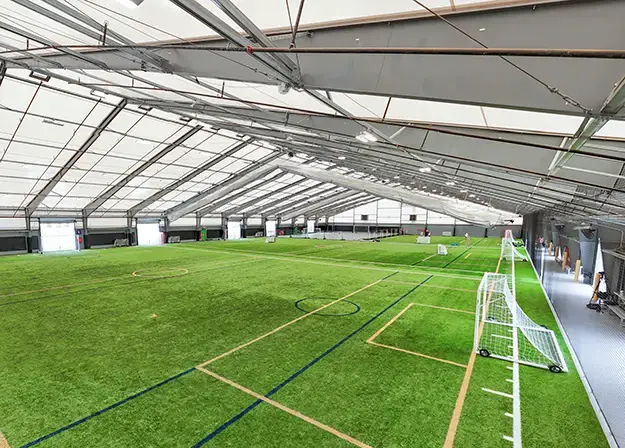
Open, enclosed, and insulated configurations for facilities across sports, agriculture, and general use.
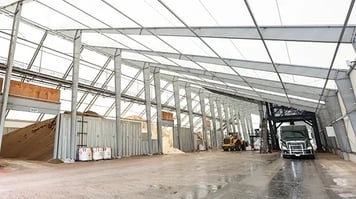
Purpose-built for industrial and corrosive environments where standard coatings and structures fall short.
3 min read
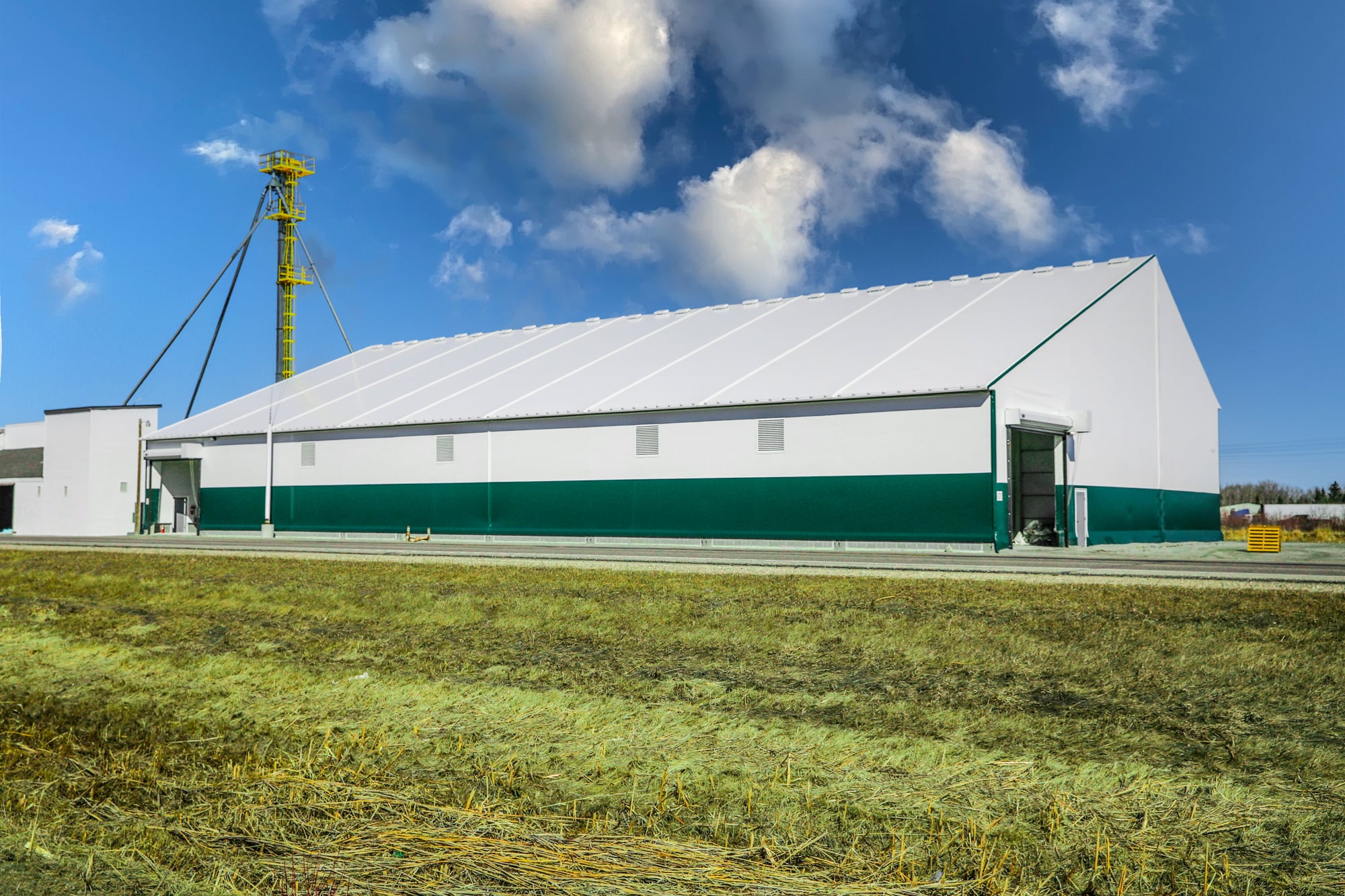
Industrial operations don't adapt well to one-size-fits-all buildings. Modern industrial fabric buildings are engineered to serve the operation, helping teams move faster, protect assets, and get online quickly.
A fertilizer storage facility faces different challenges than a mining operation. A manufacturing plant has different priorities than a marine terminal. And the requirements of a water treatment facility are dramatically different from those of a distribution center or data center. Across markets, operators choose industrial fabric buildings and fabric industrial buildings to maximize usable space, reduce maintenance, and improve efficiency.
Clear span fabric buildings provide wide-open interiors for equipment, storage, and process flow—making the building part of the operation. These structures can be tailored as fabric storage buildings or fully outfitted process facilities, depending on need.
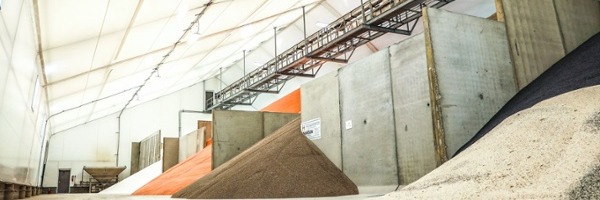
What are industrial fabric buildings used for? They are commonly applied to bulk commodity storage (salt, grain, aggregates), mining and metals infrastructure, oil and gas support facilities, manufacturing and warehousing, ports and marine terminals, waste and recycling, water treatment, logistics hubs, and even data-center support spaces. As fabric storage buildings or process-ready facilities, fabric industrial buildings can be engineered around conveyors, cranes, ventilation, environmental controls, and heavy equipment.
How much does an industrial fabric building cost? Pricing varies by size, location loads, enclosure level (roof-only to insulated), interior systems, and corrosion protection. As a general guide, many clear span fabric buildings start in the tens of dollars per square foot for basic roof-only structures and scale upward for enclosed, insulated, and highly engineered facilities. Total installed cost is best determined through project-specific engineering.
How long do industrial fabric buildings last? With engineered steel frames, quality cladding, and corrosion-resistant finishes, well-maintained industrial fabric buildings frequently deliver decades of service life. Service life is extended further with proper ventilation, moisture management, and material selection suited to corrosive environments.
Are industrial fabric buildings durable in extreme weather? Yes. Properly engineered clear span fabric buildings are designed to local building codes for wind, snow, and seismic loads. They can incorporate site-specific requirements, robust foundations, and engineered connections to perform in severe weather, remote sites, and continuous operations typical of mining, ports, and energy facilities.
Can industrial fabric buildings be customized? Absolutely. Fabric industrial buildings are custom-designed around equipment loads, process clearances, cranes and conveyors, ventilation, daylighting, insulation, doors, and environmental controls to deliver a purpose-built solution. This level of customization is equally valuable for fabric storage buildings where open interiors, dust control, and moisture management are critical.
Bulk Commodity: Open interiors in clear-span fabric buildings eliminate interior columns that interfere with loaders, stockpiles, and conveyors, maximizing capacity and throughput while protecting materials.
Mining & Metals: Industrial fabric buildings withstand corrosive minerals, dust, and heavy equipment. Custom engineering supports hanging loads, large equipment clearances, and efficient construction in remote locations.
Energy & Chemical: Fabric industrial buildings can protect processing systems, manage condensation, and integrate ventilation or environmental controls while meeting strict schedules.
Manufacturing & Warehousing: Flexible, column-free layouts keep production lines, racking, and automation adaptable as operations evolve—adding usable square footage that supports productivity.
Ports & Waterways: Corrosion-resistant components in industrial fabric buildings help resist salt air and moisture, while wide spans support cranes, conveyors, and cargo flow.
Waste, Recycling & Water Treatment: Material selection and ventilation are tailored to aggressive conditions, with clear interiors for processing equipment and vehicle access.
The right structure answers fundamental questions early: environmental conditions, movement of people and materials, structural loads, moisture and corrosion risks, unobstructed space needs, speed to operation, and future changes. Clear-span fabric buildings and fabric industrial buildings address these factors with custom engineering, corrosion-resistant options, high-performance cladding, and integrated delivery, resulting in faster deployment and long-term performance.
The result is more than covered space. Industrial fabric buildings provide infrastructure engineered to protect assets, improve efficiency, accommodate specialized equipment, withstand challenging environments, and serve for years to come, whether deployed as fabric storage buildings or fully outfitted facilities.
Industrial operations don't adapt well to one-size-fits-all buildings. Modern industrial fabric buildings are engineered to serve the operation,...
When evaluating a building envelope, performance should be measured, not assumed. Independent testing provides building owners with measurable data...
When selecting a building manufacturer, it's easy to compare building sizes, pricing, and features. But some of the most important differences happen...