3 min read

Pros and Cons of Different Building Materials

Pros and Cons of Different Building Materials
5:45

A new building is a major capital investment. You want a structure that will serve you well for as long as possible. How do the materials factor into that decision?

When we talk about traditional buildings, we’re referring to the materials and styles most commonly used in the past. For commercial purposes, that might be metal buildings, wood buildings, or even brick-and-mortar or concrete buildings. But you can also consider PVC-clad structures, a different type of permanent commercial structure.

Related article: Speed and Quality: The Role of Hybrid Building Materials

Each type of building material offers certain advantages and drawbacks. Every structure is unique in some ways, so it’s important to consider every detail. Let’s see how various building materials compare based on key decision-making factors.

  PVC Cladding Wood Metal Brick/Concrete
Clear Span Design

Yes, it can be designed to any length, width, or height — up to 300+ feet

No

Yes, though the cost rises sharply past ~150 feet

No

Portability

Yes, though permanent, buildings can also be relocated

No

No

No

Foundation Options

Yes

No

Require a concrete foundation, with or without a concrete slab

No

Naturally Bright Interior

White uninsulated PVC cladding is 12% translucent, allowing enough natural light for daytime work

The white interior is light and bright, requiring less artificial lighting

No

No

No

Enhanced Acoustics

Does not reverberate

Absorbs internal sounds for a naturally quieter interior

Can transmit some external sound

\Helps dampen interior sounds

Reverberates, amplifying external or internal sounds

Does not transmit external sound

Hard surfaces can amplify interior sound

Low Maintenance 

Yes

Virtually  maintenance- free required

Rinses clean

Flexibility resists damage from bumps and scrapes

Easy, quick onsite damage repair

No

Require ongoing upkeep

Expensive damage repair


No

Resistant to mold and insect damage

Can be dented or punctured

Vulnerable to rust and chemical corrosion

Screw holes and seams allow air and moisture leakage

Maintenance and repairs are expensive

Yes

Impervious to rust and chemical corrosion

Vulnerable to mold and mildew

Prone to cracking

Easily damaged from accidental equipment bumps  

Quick Installation

Fabric buildings can be designed and installed about 1/3 faster than wood or metal buildings

No

Pre-engineered steel is faster to construct than concrete or wood but slower than fabric buildings

No

100% Custom Design

Yes

Any size, shape or options

Easily expandable

No

Limited by architectural constraints and/or construction methods

Potentially expandable

No

Can be expanded longitudinally

No

Requires some other building material for roofing

Naturally Energy Efficient

Yes

Thermally non-conductive

Seamless and airtight

Artificial lighting not necessarily required

Yes

Thermally non-conductive but may not be airtight

Artificial lighting required

No

Conducts heat and cold

Artificial lighting required

Yes

Thermal mass can reduce heating and cooling costs

Artificial lighting required

Durability

Can last for decades

Fabric impervious to corrosion and rot

Can withstand all extreme weather including seismic events

Can last 100 years or more

Must be protected against the elements

Vulnerable to insect and moisture damage

Limited ability to withstand high winds, heavy snow loads, or seismic events

Can last for 20-50 years

Does not tear

Expands and contracts and can eventually warp

Prone to damage from high winds and hail

Can last 50 years or more


Clear Span Capability

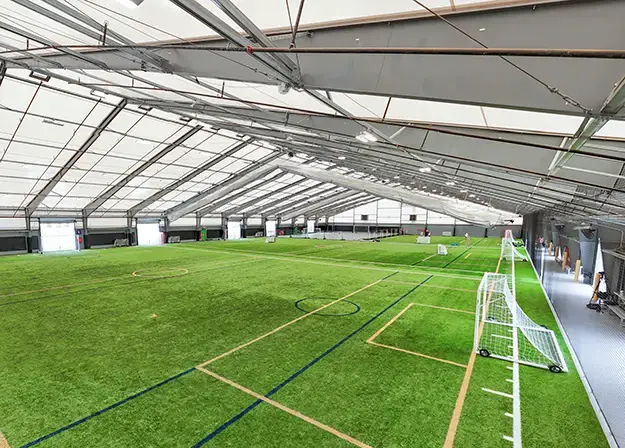
A clear span building has no interior columns or support posts breaking up the floor plan. Every square foot is usable, and there's nothing to design around for equipment, storage racking, or overhead cranes.

Steel can achieve a clear span, but it gets expensive fast—past roughly 150 feet, the steel needed to support the roof without interior columns adds to the high cost.

Concrete and wood can't achieve a true clear span at all; both need columns or load-bearing walls at intervals, which limits how the space can be used or changed later.

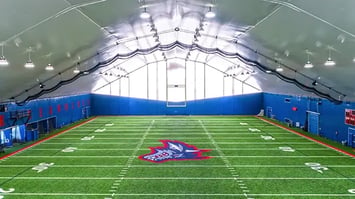
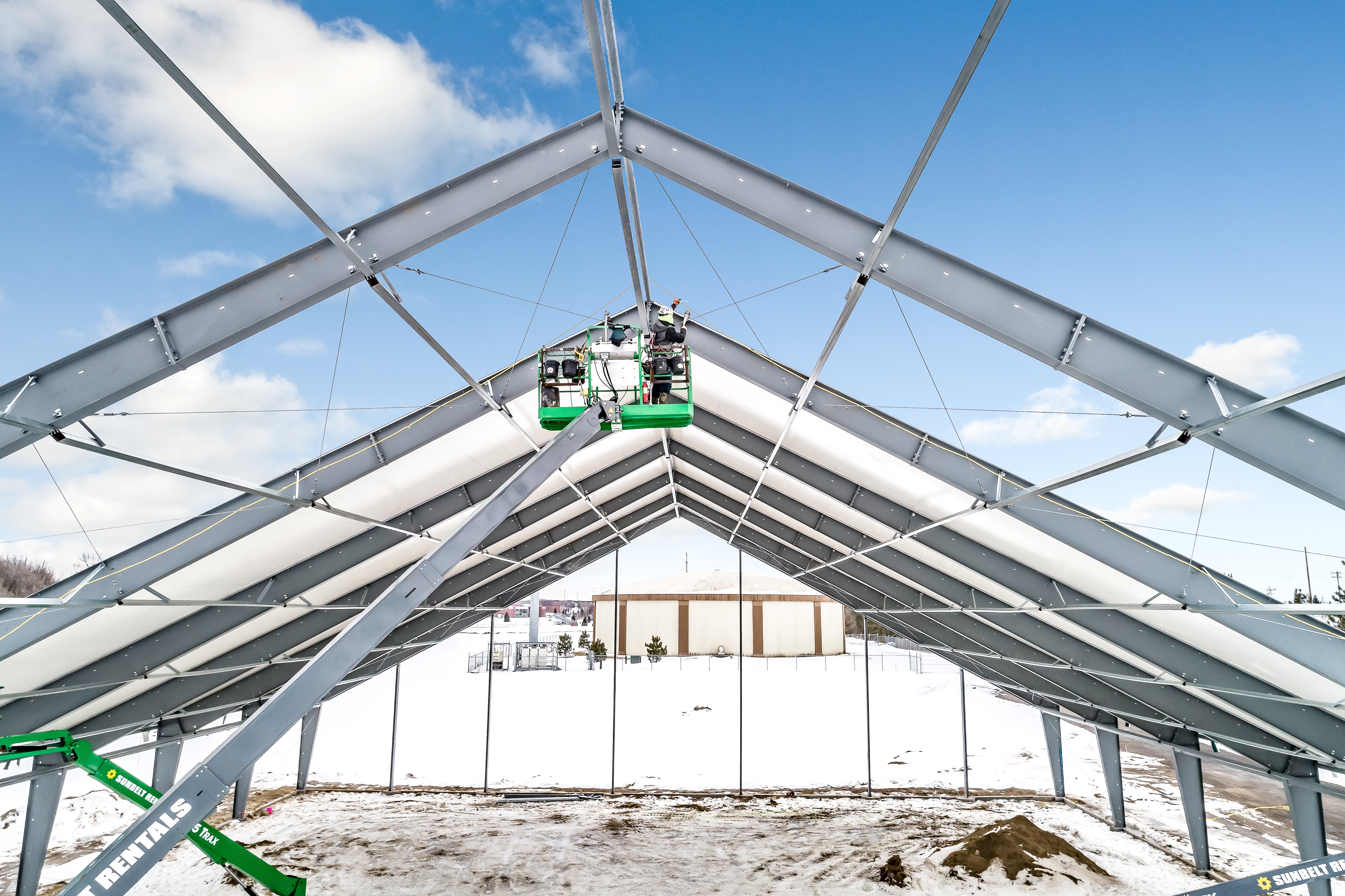
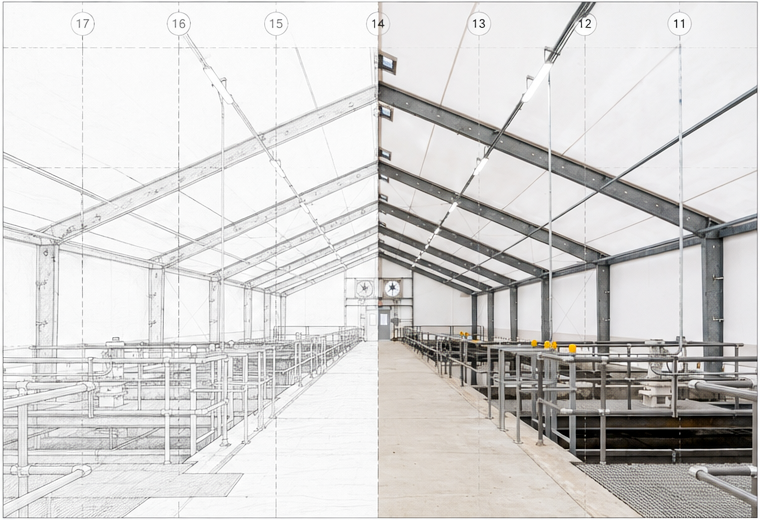
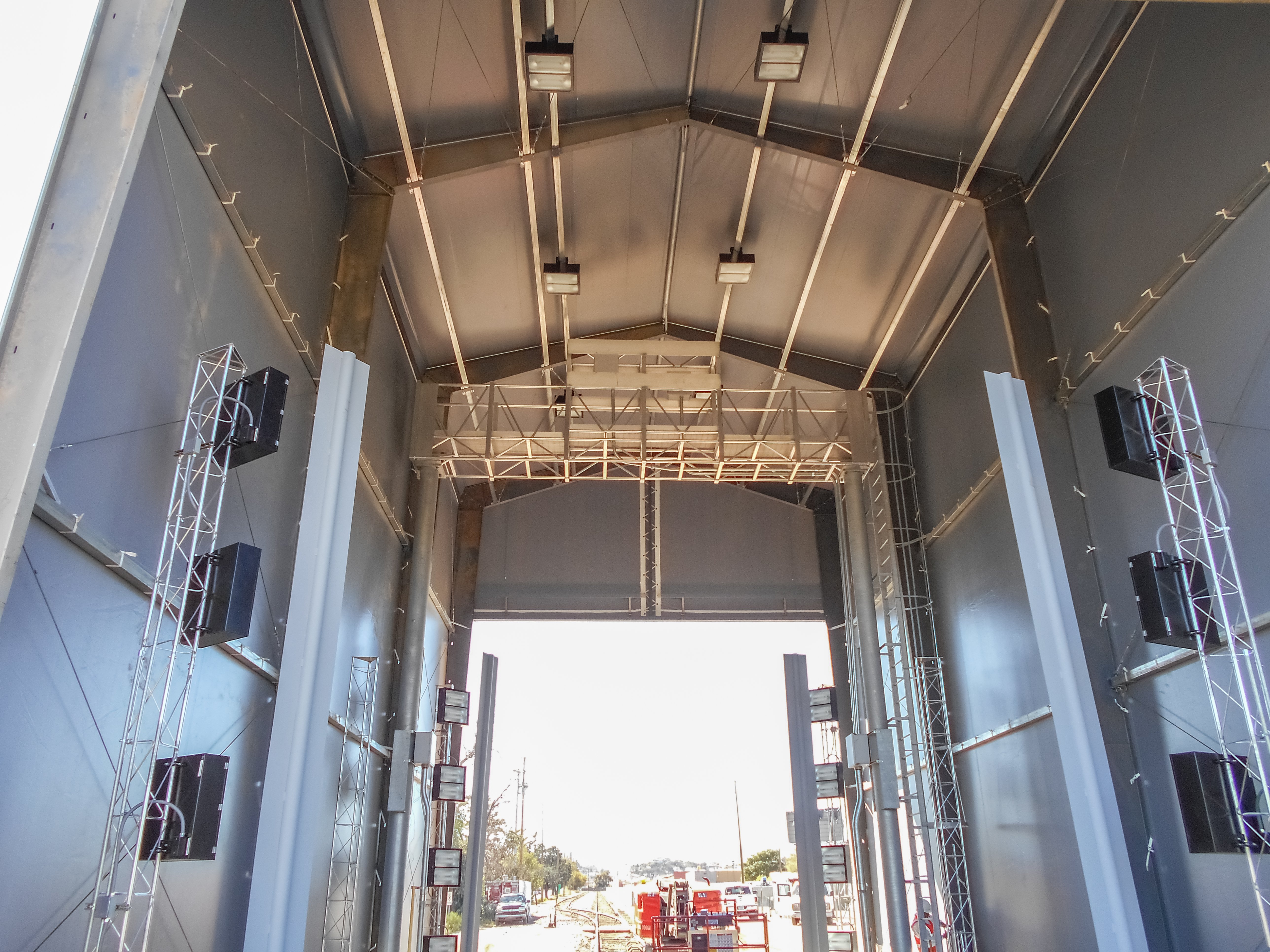
PVC-clad structures are the exception. Built on a rigid steel I-beam frame, they can reach 300 feet or more of clear span with no interior columns and without the cost of steel jumping at that scale. The same frame can also carry equipment like conveyors, cranes, and catwalks, hung from the beam wherever they’re needed, rather than fixed to a column location.

What This Means for Bulk Storage, Ports, and Process Facilities

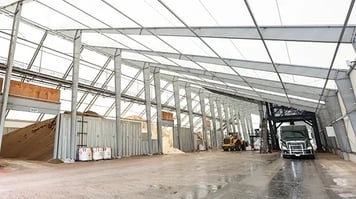
For a bulk storage operator, a steel building's corrosion risk can mean replacing the structure well before its expected lifespan ends, especially when storing salt, fertilizer, or other corrosive materials.

For a facility running a bridge crane or conveyor, the column requirement in concrete and wood buildings limits where that equipment can go.

A clear-span PVC-clad structure removes that constraint, since the equipment hangs from the frame instead.

Total Cost of Ownership

The ultimate value of a building comes from its ability to perform as expected with the least hassle over time. Fully investigate all your options to achieve the building you need now and for the future.

Consider the pros and cons over the number of years you expect to use the building–initial cost, time to occupancy, maintenance, repairs, operations overhead, and intangibles such as worker safety and comfort. We encourage you to learn more about how PVC-clad construction compares with your specifications, location, timeline, budget, and long-term goals.

Frequently Asked Questions

The most common building materials include PVC cladding, wood, metal, and brick/concrete. Each has unique strengths and drawbacks. PVC-clad buildings are a modern, permanent alternative that offers advantages in clear span design, energy efficiency, speed of construction, and maintenance compared to traditional materials.

Yes. PVC-clad structures can be engineered to any length, width, or height with no interior columns, reaching 300 feet or more in clear span. Wood and concrete can't achieve a clear span at all, and metal buildings face steep cost increases past roughly 150 feet.

PVC-clad structures install about one-third faster than wood or metal buildings, and significantly faster than brick or concrete. Metal installs faster than concrete but still trails PVC-clad construction.

Yes. ExxoTec™ PVC cladding is thermally non-conductive, seamless, and airtight, so PVC-clad structures need little added heating, cooling, or lighting. Metal conducts heat and cold directly, and wood or concrete typically needs supplemental systems to match that efficiency.

It depends on the application, location, and budget, but PVC-clad structures often deliver the lowest total cost of ownership thanks to faster installation, minimal maintenance, and energy efficiency. Weigh upfront cost against operating expenses and repairs over the building's full lifespan.

Key Takeaways

  • Clear span design, building without interior columns, decides how much of a facility's floor space is actually usable.

  • PVC-clad structures are the only material that can achieve 300+ feet of clear span without added cost and complexity.

  • Wood, metal, and concrete each trade maintenance, durability, or lifespan for a lower upfront price.

IAS AC472 Accreditation | Legacy Building Solutions

IAS AC472 Accreditation | Legacy Building Solutions

When selecting a building manufacturer, it's easy to compare building sizes, pricing, and features. But some of the most important differences happen...
Read More →
What General Contractors Should Expect from Value Engineering Partners

What General Contractors Should Expect from Value Engineering Partners

As specialty building systems gain traction across municipal, industrial, aviation, and recreational markets, more general contractors are managing...
Read More →
The Future of Industrial Construction: Why Building Design Is Evolving

The Future of Industrial Construction: Why Building Design Is Evolving

The future of industrial construction is entering a new era, with the future defined by speed, flexibility, and smarter choices. Looking ahead in...

Read More →