Why Architects Are Turning to Custom PVC-Clad Building Solutions for Modern Design
Architects today are under increasing pressure to design buildings that are visually impressive, efficient, adaptable, sustainable, and...
Building configurations organized by industry, use case, and site conditions.

See how Legacy buildings perform with durability, space, environment, and design.
Environmental PerformanceDocumentation and resources for architects, contractors, engineers,
and project owners.

Technical guides, case studies, and industry analysis for every project stage.
Projects
Legacy designs, manufactures, and installs
complete building systems under one contract.

3 min read
LegacyBuildingAdmin9036 Updated on October 1, 2025
Corrosion is the deterioration of metal caused by a reaction with the environment. It is estimated that corrosion costs billions of dollars in repair, replacement and lost time every year.
Corrosion happens every day in every industry. However, certain elements – including water, salt and chemicals – speed up the rate of corrosion. Anyone involved in working with corrosive elements or in corrosive environments focuses on minimizing rust and other damage to the metal. Storage buildings are one example of an asset that may be damaged by corrosion.
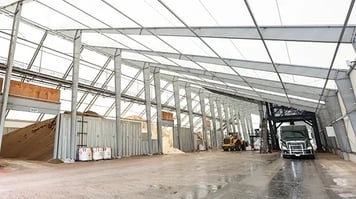
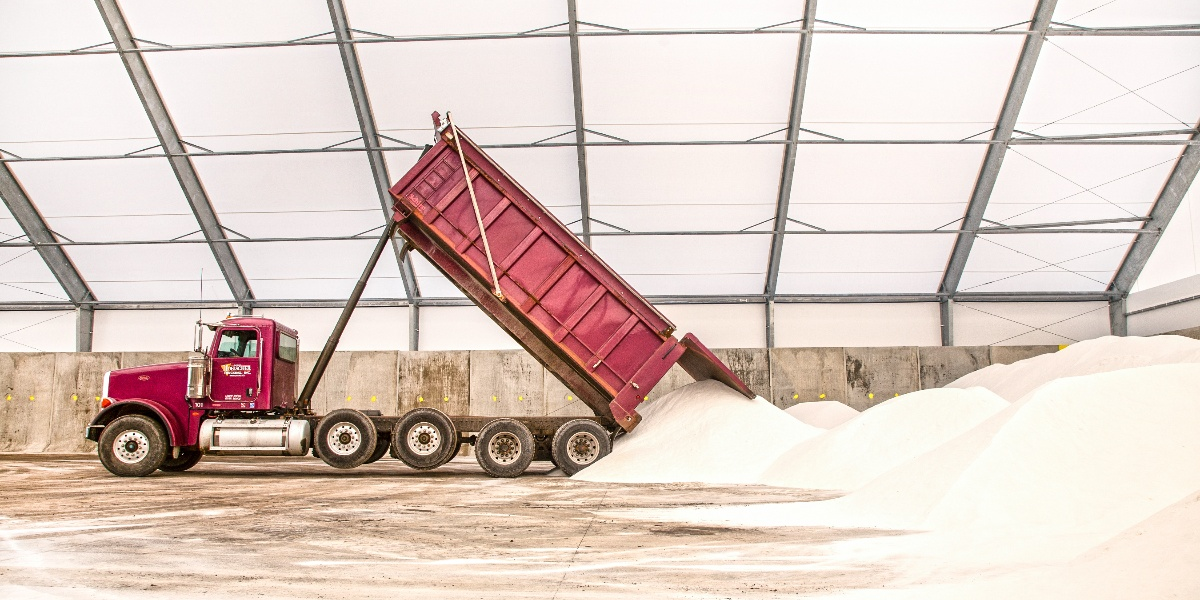
Lyons Salt, a salt mining operation in Kansas, is an example of a company that deals with the threat of corrosion every day. Recently, one of their main storage buildings – just 10 years old – was threatened with severe degradation and required replacement. They knew from previous experience that a fabric structure was the right general building type. And because the open web trusses and secondary framing members were most severely damaged by the corrosion, Lyons knew they needed another framing option.
After consulting with Legacy Building Solutions, Lyons chose a fabric structure on a hot dip galvanized rigid steel frame. The solid frame has no unseen areas for corrosion to begin, and the steel is several times thicker – and sturdier – than it is on a hollow tube frame. But because the building would be dealing with highly corrosive salt and fine salt dust on a daily basis, they required some additional anti-corrosion measures.
Want to know more? Watch this time-lapse video of the fabric structure's construction.
Ready to get started with your own corrosion-inert building? Request a consultation today.
Corrosion is the deterioration of metal caused by reactions with environmental elements like water, salt, and chemicals. It leads to costly repairs, replacements, and downtime, making it a major concern for industries that rely on steel structures.
Lyons Salt’s old storage building, only 10 years old, had severe damage to open web trusses and secondary framing members due to constant exposure to salt and fine salt dust. This degradation required a replacement building designed to withstand a corrosive environment.
A hot dip galvanized rigid steel frame provides solid, thick steel members with no hidden cavities where corrosion can start. The galvanizing adds an extra layer of protection, making it far more resistant to rust compared to hollow tube frames.
Legacy added multiple protective features, including:
A clear interior liner to shield the frame from salt while allowing light in.
Galvanized solid steel bracing rods instead of cables.
Purlin caps to keep salt dust out of hollow tubes.
Separate ventilation systems for better air circulation.
Epoxy-coated steel on conveyor supports for extra durability.
Proper ventilation reduces moisture and condensation, which are major causes of corrosion. In the Lyons Salt building, separate gravity ventilation systems for the liner cavity and building interior help maintain airflow and protect the steel from dampness.
For steel components outside the protective liner, epoxy coating provides a second barrier against corrosion. Combined with galvanizing, this double protection ensures long-term durability in highly corrosive environments.
Architects today are under increasing pressure to design buildings that are visually impressive, efficient, adaptable, sustainable, and...
Fabric Structure Durability “The fabric is a lot tougher than people realize,” said Ben Fox, former president of Legacy Building Solutions. “From...