IAS AC472 Accreditation | Legacy Building Solutions
When selecting a building manufacturer, it's easy to compare building sizes, pricing, and features. But some of the most important differences happen...
Open, enclosed, and insulated configurations for facilities across sports, agriculture, and general use.
Purpose-built for industrial and corrosive environments where standard coatings and structures fall short.

3 min read
-2-1.jpeg)
A free-span building is the most practical choice for storing dried distillers’ grains, or DDGs. With long dimensions, high ceilings, and wide-open interior spaces, tension fabric buildings for agricultural storage solutions accommodate high-capacity grain storage as well as working equipment and vehicles, all under one roof.
DDG, or DDGS (the dried product with added solubles), are popular feed additives for livestock and poultry. They are the most significant by-products of fuel ethanol produced from corn and other crops. The numbers are impressive–the U.S. Grains Council reports that American ethanol plants can produce over 15 billion gallons of ethanol and around 44 million metric tons of DDGS every year.
In addition, breweries and beverage distilleries produce more than a million tons of DDGS each year. Much of this product is exported, which means it must be transported long distances and stored without losing its value.
The DDGS market is booming, expected to hit $17.93 billion in 2025, which means smart storage solutions are more important than ever.
Co-ops and bulk port storage facilities, which handle large volumes, can improve their operations with free-span structures compared to traditional vertical silos. Here are some of the reasons why.
In an article written for Dry Bulk magazine, Legacy’s Paul Smith describes five dry bulk storage challenges that can be solved by choosing a tension fabric building:
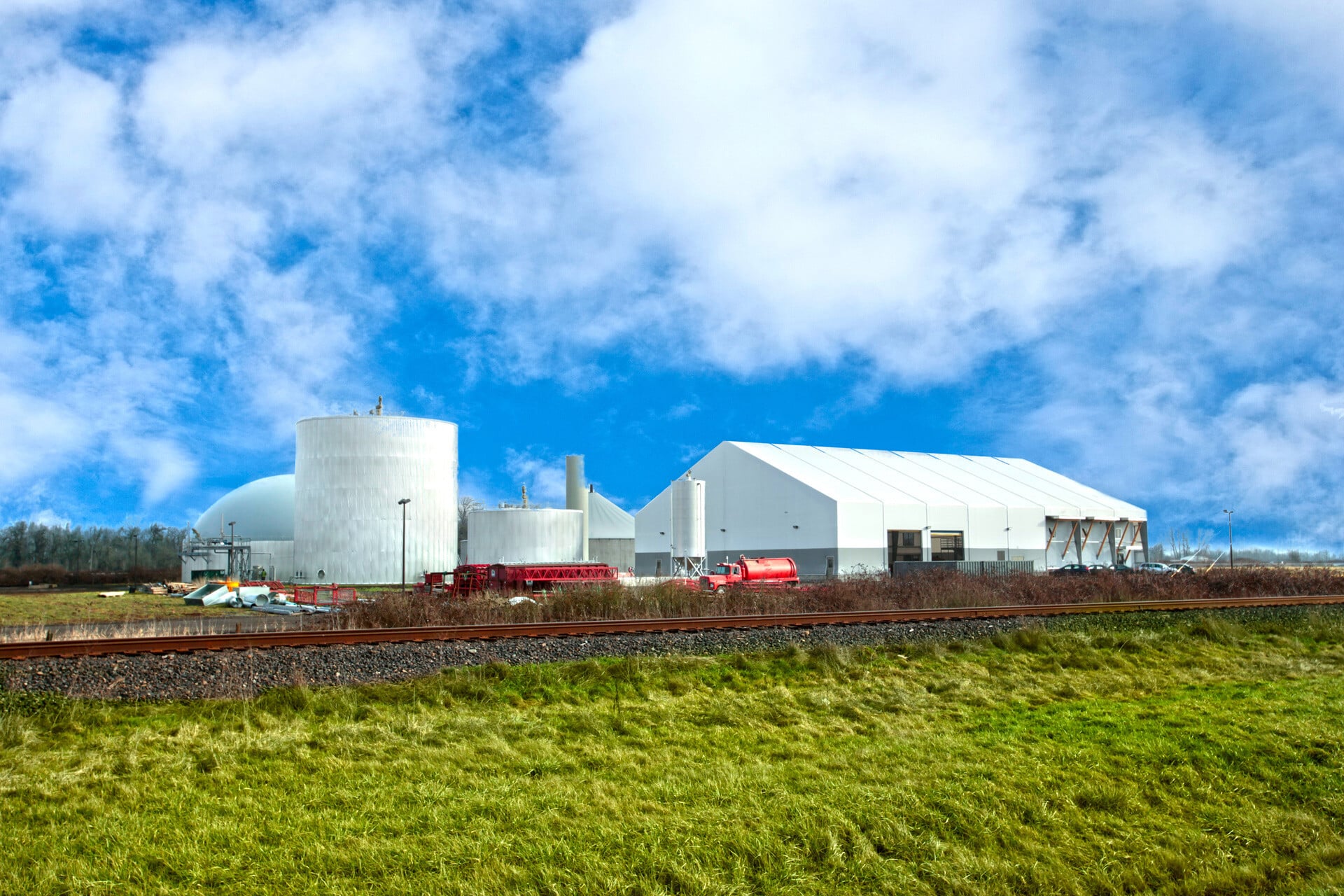
Our team worked with farmer-owned cooperative AGRILAND FS to design a three-in-one fertilizer storage facility using the same innovative engineering/features that could easily be applied to a custom-designed DDGS storage building. And this building was constructed in just 23 days!
For safe handling practices, DDGS storage and handling must comply with the Food Safety Modernization Act (FSMA) preventive control requirements. These regulations ensure ethanol plants implement hazard-free manufacturing practices for animal food production, providing formal assurance to buyers that American DDGS remains a safe feed ingredient.
Fresh distillers’ grains can be used wet as feed additives, but only if they are used quickly, especially during warm summer months. Otherwise, quality degrades, and the product can begin to spoil. Drying the distillers’ grains to 12% or lower moisture content makes them storable for a long time—years, even. That enables local producers and farmers to stockpile them, and it makes international transport possible. The economic benefits are obvious, but only if the product remains dry.
Although DDGS can be stored outdoors if you cover it, access is inconvenient, and this is not a long-term solution. Inside a building, moisture that causes structural corrosion is also a serious threat to DDGS in storage.
Over time, DDGS can absorb moisture from its storage environment, a risk that increases with higher relative humidity and warmer temperatures. Increased moisture content can encourage growth of mold, mildew, and bacteria and invite insects often associated with grain storage. It also increases DDGS density—product particles can clump, cake, or become nearly solid, reducing flowability. Handling becomes very difficult, and the product must be reground for use.
With DDGS exports reaching record levels in 2024, proper storage solutions that address moisture control help maintain product quality during longer transport and storage periods.
Successful DDGS storage requires more than a huge footprint and roof overhead.
Each Legacy tension fabric building offers all the benefits of any free-span grain storage building—and then some. Custom-engineered agricultural storage solutions provide the footprint and features needed to make your building function efficiently. ExxoTec™ fabric is inherently corrosion resistant and nonconductive, helping protect against moisture intrusion and control interior temperatures year-round. Advanced passive ventilation systems support natural airflow to help regulate interior temperatures without additional costs or effort.
Owners and operators can also look forward to a positive return on investment because many of the features that make Legacy buildings unique also help reduce ongoing maintenance and energy costs.
The benefits of flat storage for DDGS and fertilizer extend beyond the initial construction savings, with long-term operational efficiencies that continue to provide value year after year. Talk to a tension fabric building expert to learn how you can improve DDGS and potash storage solutions.

When selecting a building manufacturer, it's easy to compare building sizes, pricing, and features. But some of the most important differences happen...
As specialty building systems gain traction across municipal, industrial, aviation, and recreational markets, more general contractors are managing...
The future of industrial construction is entering a new era, with the future defined by speed, flexibility, and smarter choices. Looking ahead in...