IAS AC472 Accreditation | Legacy Building Solutions
When selecting a building manufacturer, it's easy to compare building sizes, pricing, and features. But some of the most important differences happen...
Open, enclosed, and insulated configurations for facilities across sports, agriculture, and general use.
Purpose-built for industrial and corrosive environments where standard coatings and structures fall short.
3 min read
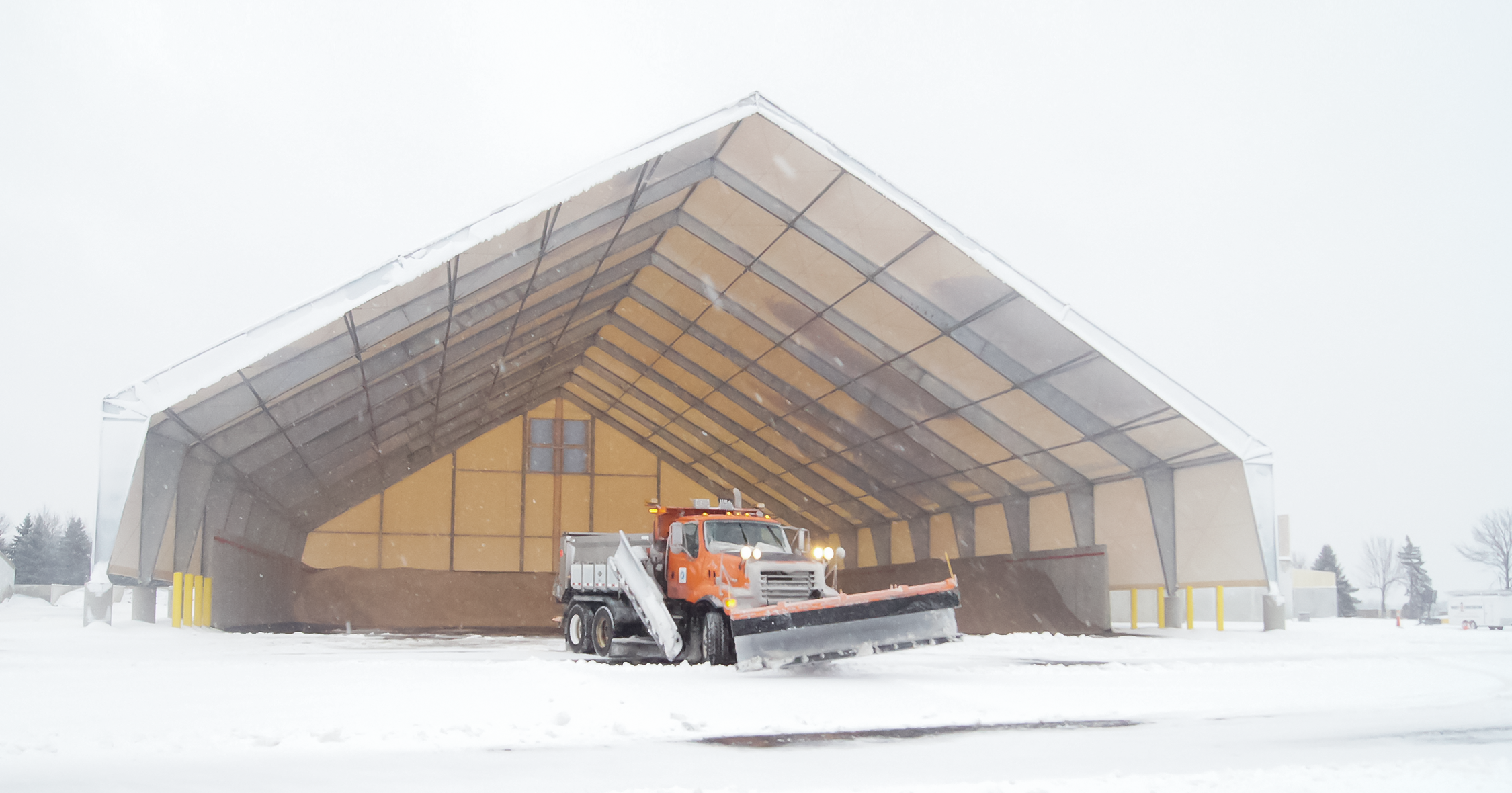
In industrial storage, corrosion builds slowly. Fasteners rust first, followed by wall panels and eventually structural members. By the time visible damage appears, deterioration has typically been advancing for years. Repairs pull facilities offline at the worst moments, and in salt or fertilizer storage, a corroded building can compromise the product itself.
Metal buildings in these environments corrode on a predictable schedule. The question is whether a facility is designed to slow that timeline or just built to tolerate it.
In corrosive environments, there are better options to protect the steel frame.
The same structure that performs reliably in one application can fail quickly in another, depending on the chemicals, moisture levels, and airborne particulates present. A few examples:
Salt and fertilizer storage: Road salt and agricultural inputs like urea and ammonium nitrate are highly corrosive. Moisture and chemical exposure accelerate frame deterioration, and fine dust from bulk handling settles into joints and welds where coatings are thin. Salt and fertilizer storage buildings are among the most demanding environments for frame protection.
Mining and mineral handling: Many ores contain chemicals that react with galvanized coatings. Copper concentrate, for example, reacts with the zinc in hot-dip galvanizing (HDG), making it insufficient and counterproductive. Mining structures need frame protection chosen with the specific materials on-site in mind.
Ports and coastal facilities: Salt air and humidity are constant in marine environments. HDG structures within one mile of the coast often show rust within five to seven years. In active splash zones, that window can be much shorter. Port facilities need protection rated for continuous marine exposure.
Oil, gas, and chemical handling: Chemical off-gassing creates corrosive vapor environments that work through standard coatings over time. The cladding itself also needs to be chemically inert. ExxoTec™ PVC cladding meets that requirement, where metal panels often do not. Oil and gas structures need to be built for sustained chemical exposure, not occasional contact.
During hot-dip galvanizing, the steel is dipped in zinc for a uniform coating. Once the steel is dipped, no other elements come in contact with it, leaving the steel itself immune to the impact of corrosive materials.
In some cases, like in a mining building that stores copper concentrate, galvanizing is not the right solution because the material "reacts" with the zinc in the coating. An epoxy coating, or multiple epoxy coatings, is advisable in these cases.
Solid steel beams are also more resistant to corrosion than open web trusses. The solid beams have no unseen interior spaces where corrosion can start. HDG also has a practical repair limitation: once the coating is damaged or corrosion takes hold, field repair is difficult.
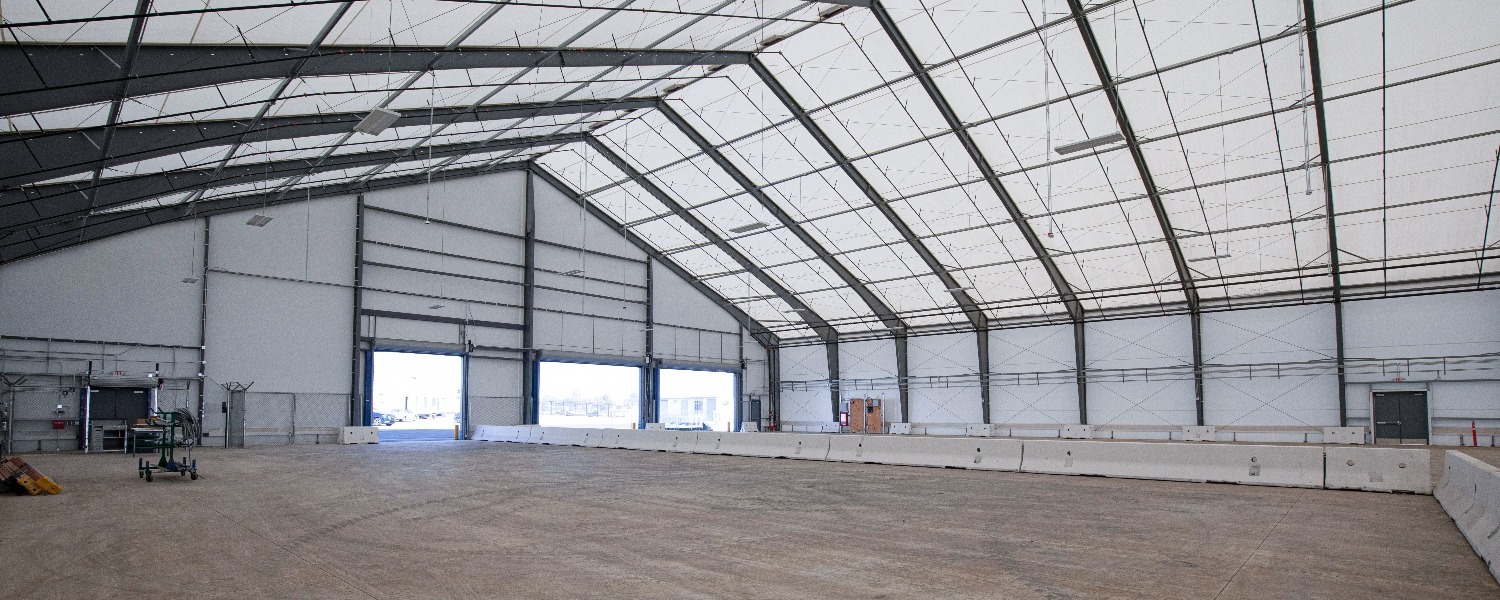
When standard galvanizing isn't sufficient, epoxy coating closes the gap. PVC-clad tension structures can be specified with added corrosion protection over HDG. EpoxxiShield™ is an epoxy coating applied to the structure, creating a barrier of corrosion protection.
At Legacy, this coating is applied in-house as part of the manufacturing process, which ensures consistent coverage across welds, fasteners, and all frame members.
In independent lab testing, steel samples with EpoxxiShield™ and HDG were both subjected to over 2,000 hours of continuous salt fog exposure. The HDG sample showed rust across 1–10% of its surface area. The EpoxxiShield™ sample showed negligible corrosion, 0.01% or less.
EpoxxiShield™ will keep your building frames better protected and easier to repair. For the most caustic conditions (heavy chemical exposure, sustained salt fog, or abrasive mineral dust), EpoxxiShield™ COR adds additional epoxy layers and a zinc-rich primer for a higher-grade barrier.
Save for the highest levels of corrosion, an interior fabric liner keeps all steel members completely separated from elements that may cause corrosion or damage. Lined buildings prevent all elements, even fine dust, from building up on steel frames. With no opportunity for corrosive materials to contact the steel, there is no way for corrosion to start.
The liner attaches to the building frame using a keder system, covering welds, fasteners, and the areas most likely to be missed by surface coatings.
A passive cavity ventilation system keeps dry air circulating behind the liner, which prevents moisture and condensation from building up on the frame. In highly corrosive environments like mining or salt storage, a liner can be combined with HDG or EpoxxiShield™ for a layered protection system.
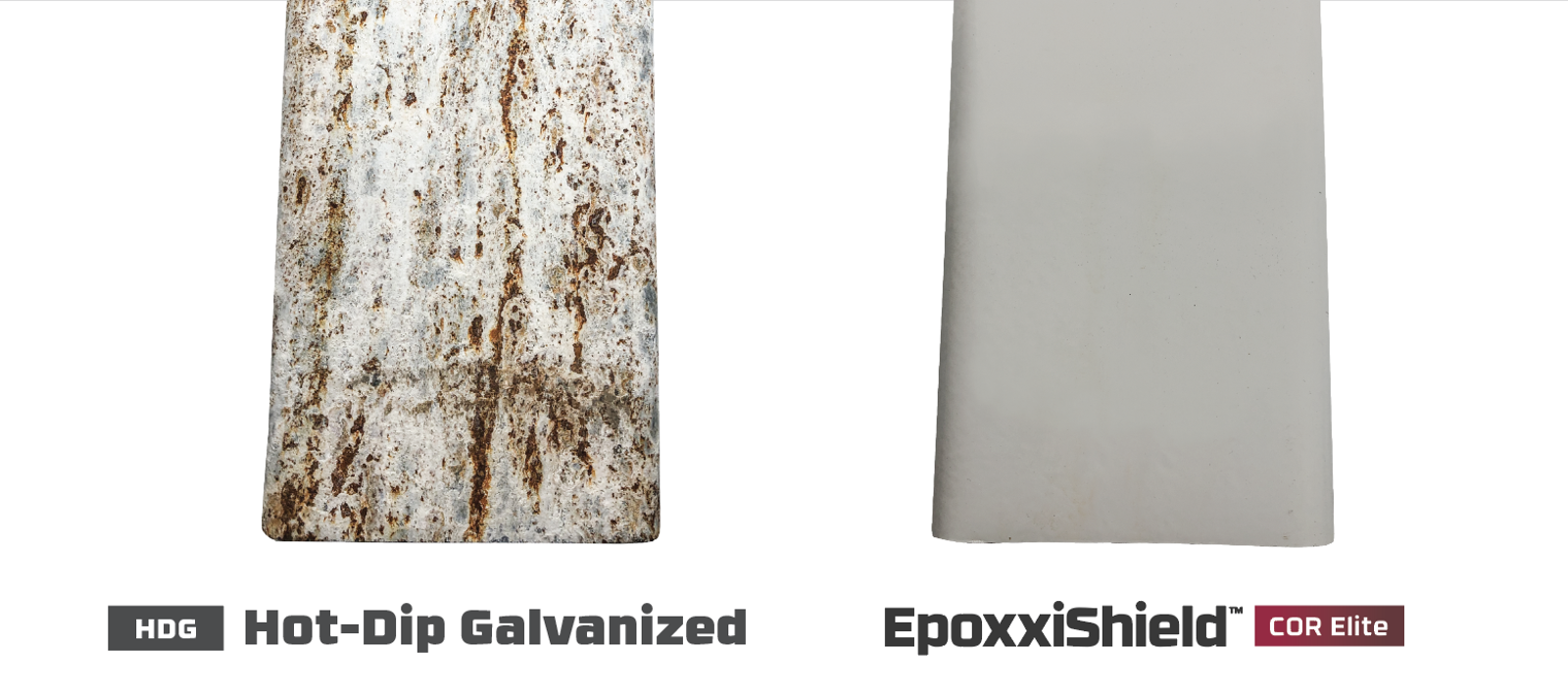
PVC cladding can extend your building’s life and offer peace of mind. Corrosion damage is eliminated due to the nature of the cladding, and the lack of screw hole penetrations decreases the risk of water/air leakage. The steel parts in a Legacy building can be protected with EpoxxiShield™, a coating that provides strong, deep protection against corrosion.
PVC-clad structures are what we do, and innovative thinking is who we are.
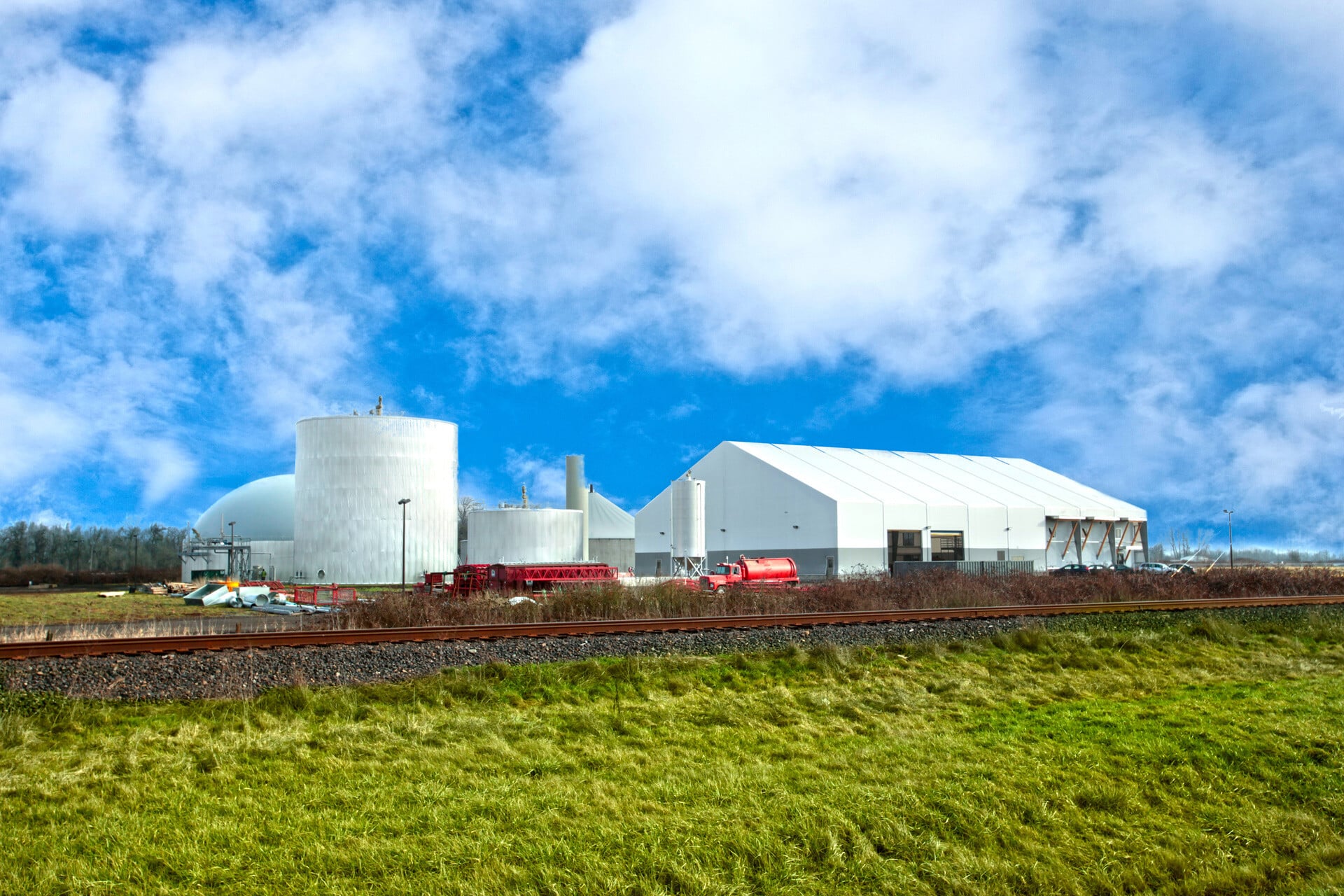
When selecting a building manufacturer, it's easy to compare building sizes, pricing, and features. But some of the most important differences happen...
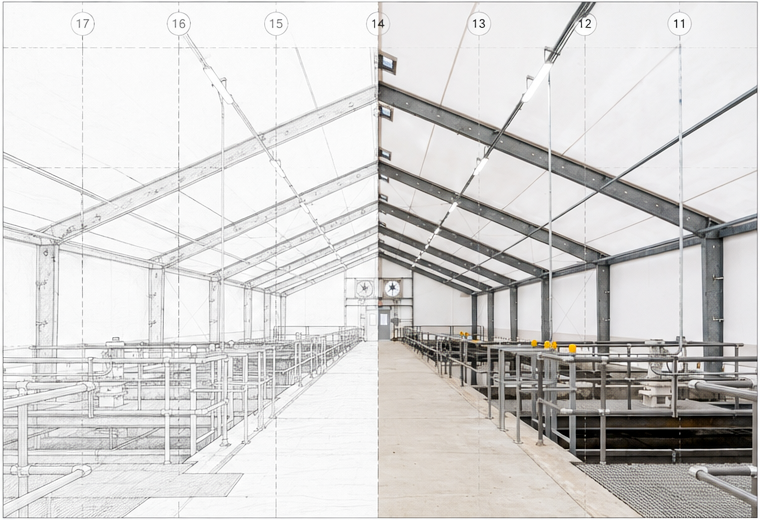
As specialty building systems gain traction across municipal, industrial, aviation, and recreational markets, more general contractors are managing...
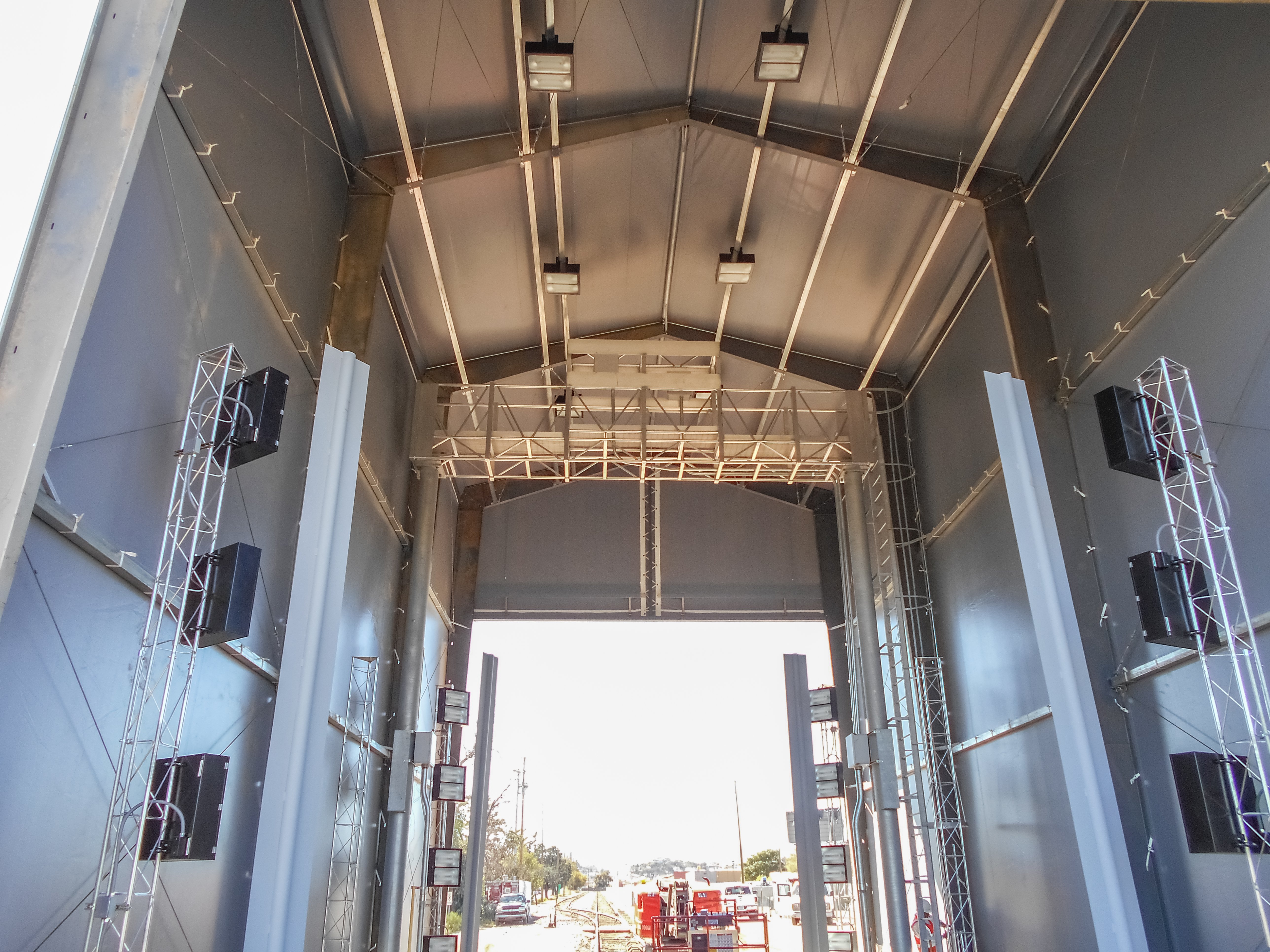
The future of industrial construction is entering a new era, with the future defined by speed, flexibility, and smarter choices. Looking ahead in...